Product Description
In addition to personal care, Himalayan salt also plays a crucial role in animal husbandry. Rose salt sand, a form of finely ground Himalayan salt, is commonly provided to cattle and sheep as a natural source of essential minerals. This salt sand serves as a supplement to their diet, promoting overall health and well-being. Animals instinctively seek out salt licks, and Himalayan salt bricks offer a convenient and durable option for them to access these vital minerals.
The use of Himalayan salt in both foot baths and animal nutrition underscores its versatility and value. Whether enhancing human wellness or supporting animal health, this natural resource continues to prove its worth in various applications.
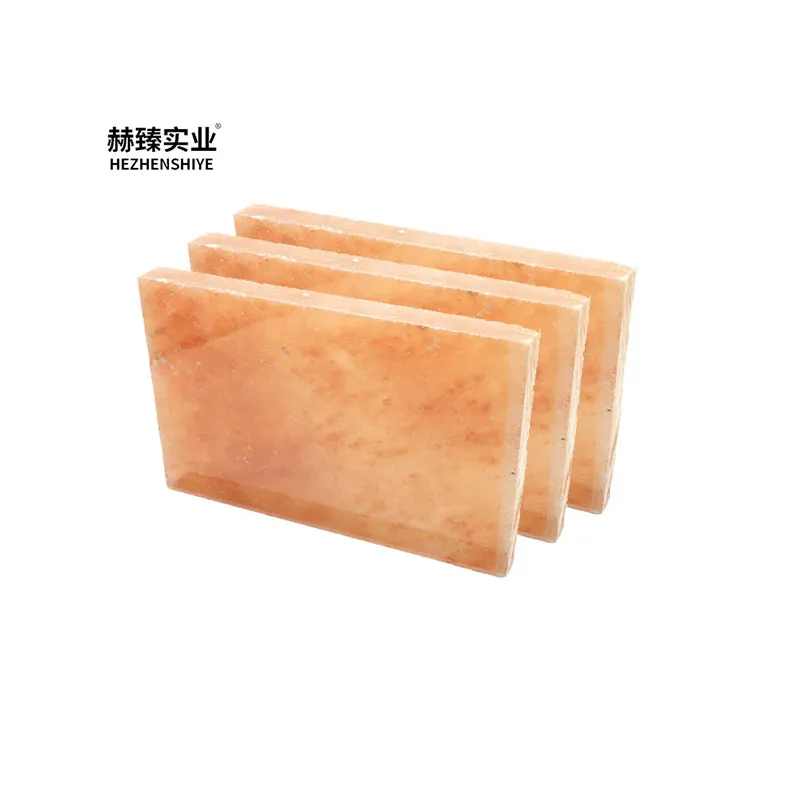
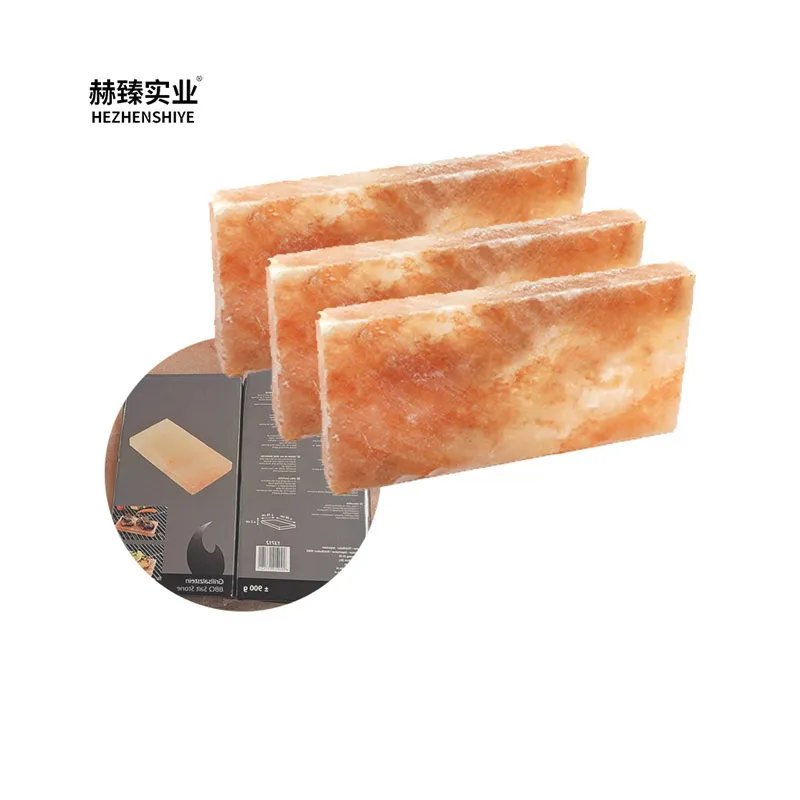
Cooking and seasoning: Salt bricks can be directly used in cooking, such as frying meat, grilled fish, etc., to add natural saltiness and mineral flavor to food. At the same time, it can also be used as a substitute for baking pan or baking mesh to make food more delicious.
Decorate and purify the air: Himalayan salt bricks have a natural decorative effect and can be used as a home decoration. In addition, it can also release negative ions, which helps to purify the air and improve the indoor environment.
Health and wellness: Put Himalayan salt bricks in the bath to dissolve, you can soak a mineral-rich salt bath, help to relax the body and mind, relieve fatigue. At the same time, it can also be used as a hot pack, which has a certain effect on relieving joint pain and muscle tension.









| Color |
Pink |
| Shape |
Brick |
| Size |
20*10*1/1.5/2cm |
| Grade |
Food Grade/ |
| Package |
Customized package |
| MOQ |
1PCS |
Salt bricks play a vital role in industrial humidity regulation within warehouse storage facilities, where maintaining stable environmental conditions is crucial to safeguard stored goods from moisture-induced damage. In the vast expanse of modern logistics and warehousing, the significance of environmental control cannot be overstated. Many items housed in warehouses, such as paper products, textiles, and electronic components, are highly sensitive to fluctuations in humidity. Excess moisture can trigger a cascade of issues, including mold proliferation, material warping, or component corrosion, while overly arid conditions may cause brittleness or cracking in various products.
For instance, paper products stored in high-humidity environments can develop unsightly mold spots, rendering them unsellable, and delicate electronic components may suffer from short circuits due to moisture infiltration. This is particularly evident in the case of cardboard boxes used for shipping. High humidity can weaken the structural integrity of the cardboard, making it more prone to collapse during stacking and transportation. In textile warehouses, moisture can lead to the growth of mildew, causing permanent stains and odors that are difficult to remove. For electronic components, even a small amount of moisture can lead to oxidation of metal parts, resulting in reduced performance and potential product failures.
Salt bricks address these challenges by naturally absorbing or releasing moisture based on the surrounding air conditions, effectively maintaining humidity levels within an optimal range of 30% - 60%—a benchmark for most storage environments. This remarkable ability is deeply rooted in the physical and chemical properties of salt itself. To understand how salt bricks work, it is essential to delve into the science behind their operation.
These bricks operate on the principle of their inherent hygroscopic properties. Composed primarily of sodium chloride, salt bricks form a porous crystalline structure that acts like a natural sponge. When the relative humidity in the warehouse exceeds 60%, salt bricks begin to attract and bind water molecules through a process called deliquescence, where the salt partially dissolves upon absorbing moisture. This process is not only a simple physical adsorption but also involves complex chemical interactions at the molecular level. As the salt absorbs water, it forms a saturated solution on its surface, which continues to draw in more moisture until an equilibrium is reached.
Recent research has shown that the rate of moisture absorption by salt bricks can be influenced by factors such as temperature and air circulation. For example, in warmer environments, the rate of deliquescence increases, allowing salt bricks to absorb moisture more quickly. Proper air circulation also helps to ensure that moisture is evenly distributed throughout the warehouse, maximizing the effectiveness of the salt bricks. Conversely, when air humidity drops below 30%, the bound moisture is released back into the environment through a process of evaporation. This dynamic equilibrium requires no external power source, making salt bricks a cost-effective and energy-efficient solution for warehouse managers.
Unlike mechanical humidity control systems that may break down or consume large amounts of electricity—with some industrial dehumidifiers using up to 2 kWh per hour—salt bricks operate continuously with minimal maintenance. The cost savings associated with salt bricks are significant, especially for large-scale warehouse operations. Over the course of a year, the electricity costs saved by using salt bricks instead of traditional dehumidifiers can amount to thousands of dollars. In addition to direct energy savings, there are also savings in terms of maintenance costs. Mechanical dehumidifiers require regular servicing, including filter replacements and compressor checks, which can add up over time.
Salt bricks can be strategically placed in various areas of the warehouse, such as near storage racks, in corners where moisture tends to accumulate, or around sensitive goods. In large facilities, creating "salt brick zones" every 50 square meters ensures comprehensive humidity regulation. However, the optimal placement of salt bricks is not a one-size-fits-all solution. It depends on several factors, including the size and layout of the warehouse, the types of goods being stored, and the local climate conditions. For example, in a warehouse located in a coastal area with high ambient humidity, more salt bricks may be required compared to a facility in a drier region.
To determine the ideal placement, warehouse managers can use humidity sensors to map out areas of high and low humidity within the facility. This data can then be used to strategically position salt bricks where they are needed most. Additionally, the height at which salt bricks are placed can also impact their effectiveness. Placing them at floor level may be more effective for capturing moisture that accumulates on the ground, while higher placements can help regulate humidity in the upper parts of the warehouse where air circulation may be different.
In addition to humidity control, salt bricks also contribute to maintaining a clean warehouse environment. The surface of salt bricks has electrostatic properties that attract and trap small dust particles, acting as a natural air filter. This not only keeps stored goods cleaner but also improves air quality for warehouse staff, reducing the risk of respiratory discomfort caused by airborne particulates. The impact of this on employee health and productivity should not be underestimated. In a clean and healthy working environment, employees are less likely to fall ill, leading to fewer sick days and increased operational efficiency.
Studies have shown that exposure to high levels of dust in the workplace can lead to various respiratory issues, including asthma and bronchitis. By reducing dust levels, salt bricks help create a safer and more comfortable working environment. Moreover, the reduction in dust also helps to prevent damage to stored goods. Dust can accumulate on products, causing cosmetic damage and potentially affecting their functionality, especially in the case of sensitive electronic equipment.
Over time, salt bricks retain their effectiveness, though they may need occasional replacement once they become fully saturated with moisture or dust. Typically, a set of salt bricks can last up to 12 - 18 months in a standard warehouse setting. Their durability and long-lasting performance make them a reliable choice for industrial humidity regulation in warehouse storage facilities, supporting the protection of valuable stored goods and the creation of a stable working environment. However, the lifespan of salt bricks can be extended with proper care and maintenance. Regularly cleaning the surface of the bricks to remove accumulated dust can help maintain their hygroscopic and electrostatic properties.
There are various methods for cleaning salt bricks. One simple approach is to gently brush the surface with a soft-bristled brush to remove loose dust. For more stubborn dirt, a damp cloth can be used, but care must be taken not to oversaturate the brick. Another option is to use compressed air to blow away dust particles, which is particularly effective for hard-to-reach areas. By implementing a regular cleaning schedule, warehouse managers can ensure that salt bricks continue to function optimally for an extended period.
Moreover, the use of salt bricks aligns with the growing trend towards sustainable and eco-friendly business practices. Unlike many industrial humidity control solutions that rely on harmful chemicals or consume large amounts of energy, salt bricks are a natural and renewable resource. They do not produce any emissions during operation, making them an environmentally friendly choice for companies looking to reduce their carbon footprint. The production of salt bricks also has a relatively low environmental impact compared to the manufacturing of complex mechanical humidity control systems.
Salt is one of the most abundant minerals on Earth, and its extraction and processing have a minimal environmental footprint compared to the production of plastics and metals used in traditional humidity control devices. Additionally, at the end of their useful life, salt bricks can be disposed of safely without causing harm to the environment. Some companies even recycle used salt bricks, using them for other purposes such as de-icing roads or as a component in certain agricultural applications.
In conclusion, salt bricks offer a multi-faceted solution for warehouse storage facilities. Their ability to regulate humidity, filter the air, and provide a cost-effective and sustainable option makes them an invaluable asset in modern warehousing. As the demand for efficient and environmentally friendly storage solutions continues to grow, salt bricks are likely to play an even more significant role in the future of industrial humidity regulation. Warehouse managers and logistics professionals should consider integrating salt bricks into their environmental control strategies to ensure the long-term preservation of stored goods and the well-being of their employees.





 Banner PDF
 Get A Quote