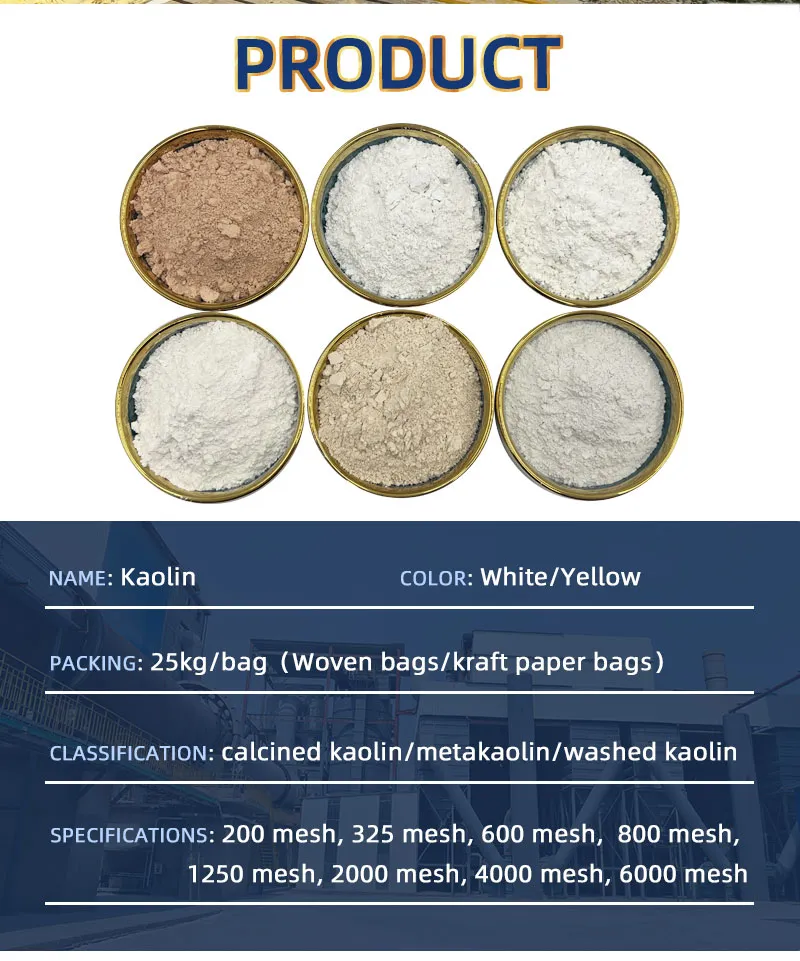
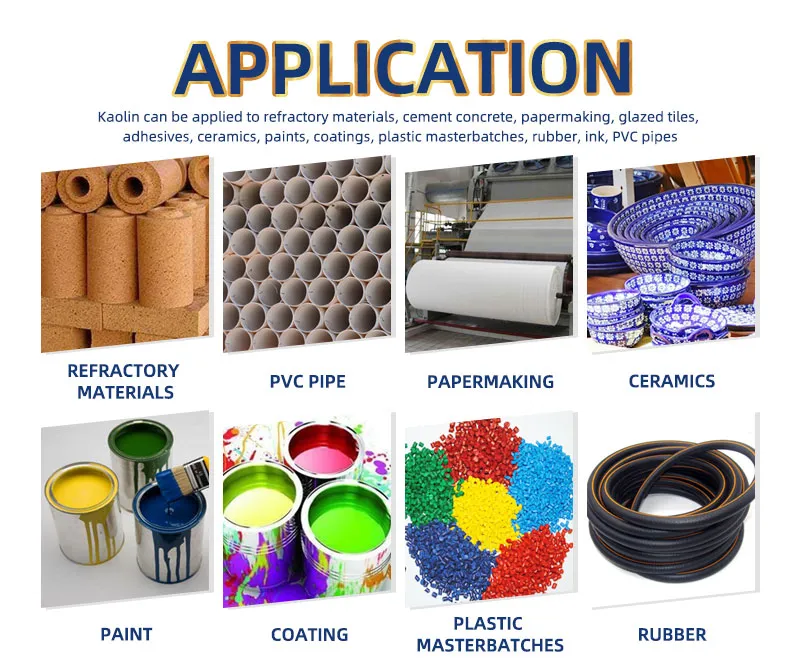
Flow control stands as core and irreplaceable function of kaolin powder in printing inks, directly determining success of printing process across diverse commercial applications. Ink flow governs critical transfer process from printing plates to substrates—whether paper for brochures, cardboard for packaging, or plastic for product labels—and even minor flow imbalances lead to noticeable defects. Excessive flow causes ink to spread beyond intended boundaries on plates, resulting in blurred text edges or smudged images. Insufficient flow, by contrast, leads to patchy coverage where ink fails to fill fine details on plates, leaving gaps or uneven color on printed materials. Kaolin powder addresses this through its inherent plate-like particle structure, which interlocks within ink formulations to create precise thixotropic effect—unique property that makes ink behave differently under static and dynamic conditions. At rest, particles form loose network that thickens ink consistency, preventing pigment particles from settling to bottom of containers or printing trays. This stability is vital during storage and idle periods, ensuring ink remains homogeneous without needing constant stirring. During printing, mechanical shear from rollers or printing heads breaks down particle network, thinning ink to smooth, fluid state that transfers evenly across plate surfaces. This on-demand flow adjustment ensures ink spreads uniformly over every detail of printing plates, from tiny text to intricate graphics, and adheres consistently to substrates. It eliminates common defects like streaks from uneven flow, splotches from excess ink buildup, or hollow spots from insufficient coverage, maintaining consistent quality even during high-speed commercial printing runs.
Print quality enhancement from kaolin powder improves sharpness and color consistency. It refines ink texture, creating smooth formulation that transfers precisely to substrates. Fine kaolin particles fill gaps between pigment particles, ensuring uniform color distribution and preventing color variation across printed sheets. For commercial printing like brochures or packaging, this consistency ensures brand colors remain accurate and text edges stay sharp, enhancing product professionalism.Print quality enhancement driven by kaolin powder directly elevates two key metrics critical for commercial printing: sharpness of details and consistency of color—both essential for maintaining brand integrity and professional appearance. Beyond basic texture refinement, kaolin powder acts as micro-level calibrator for ink formulations, creating ultra-smooth mixture that interacts seamlessly with printing plates and substrates. Its fine, uniform particles integrate with pigment particles, filling microscopic gaps between them to create cohesive, evenly distributed ink matrix. This eliminates uneven pigment clumping that causes color splotches or light spots on printed sheets, ensuring every portion of printed material displays consistent hue and intensity. For commercial printing scenarios like brand brochures, product catalogs, or packaging, this color consistency is non-negotiable—consumers expect brand logos and colors to match across different materials, and variations can undermine brand recognition. Kaolin powder also enhances edge definition by ensuring ink transfers in precise, controlled layers. When ink with kaolin powder meets substrate, its smooth texture allows it to form crisp boundaries around text and graphics, avoiding feathering or blurring that occurs with coarse inks. This sharpness is particularly valuable for small text on product labels or fine details in packaging designs, where legibility and visual clarity directly impact consumer perception. Additionally, kaolin powder’s light-reflective properties subtly boost color vibrancy by ensuring uniform light interaction across printed surface, making brand colors appear more vivid without needing additional pigments. This combination of sharpness and color consistency transforms ordinary prints into professional, high-quality materials that stand out in competitive commercial markets.
Opacity and coverage of printing inks are boosted by kaolin powder. Its light-scattering properties increase ink opacity, allowing for full coverage of dark substrates with fewer layers. This is critical for packaging inks that must cover colored cardboard or plastic. Kaolin powder also reduces pigment usage by enhancing color efficiency—less pigment achieves desired opacity, lowering ink formulation costs.Opacity and coverage capabilities of printing inks are significantly amplified by kaolin powder, addressing critical pain points in commercial printing—especially for packaging and promotional materials that require bold, consistent appearance on diverse substrates. Kaolin powder’s unique particle structure and light-scattering properties work in tandem to boost ink opacity: its plate-like particles align within ink film, reflecting and refracting light to create barrier that hides underlying substrate color. This is game-changing for packaging inks that must cover colored cardboard, printed recycled materials, or dark plastic substrates. Without kaolin powder, printers would need multiple layers of ink to achieve full coverage, increasing material usage, drying time, and production costs. With kaolin powder, even single layer of ink can fully mask dark substrates, ensuring printed designs and text remain vivid and legible. This efficiency is particularly valuable for high-volume packaging production, where speed and cost control are paramount. Beyond opacity, kaolin powder enhances color efficiency by optimizing pigment performance. Pigment particles often leave microscopic gaps in ink film, leading to uneven coverage and wasted pigment. Kaolin powder’s fine particles fill these gaps, ensuring every pigment particle contributes to color development. This means manufacturers can reduce pigment dosage by significant margins while maintaining or even improving desired color intensity and opacity. For example, packaging ink for cereal boxes that previously required high pigment levels to cover brown cardboard can use less pigment when blended with kaolin powder, cutting raw material costs without sacrificing quality. This cost-saving benefit extends to all commercial ink applications, from offset printing for flyers to flexographic printing for labels, making kaolin powder a cost-effective addition that enhances performance while reducing expenses.
Adhesion of inks to substrates is improved by kaolin powder. It enhances bond between ink and surfaces like glossy paper or plastic, preventing smudging or peeling after printing. This adhesion is essential for commercial applications like product labels or outdoor signage, which must withstand handling and environmental exposure. Kaolin powder also improves ink dry time by absorbing excess solvents, reducing production delays between printing and finishing.Adhesion of inks to diverse substrates is substantially improved by kaolin powder, solving common durability issues in commercial printing where printed materials face frequent handling or environmental exposure. Inks without kaolin powder often struggle to bond with non-porous or glossy substrates like plastic, coated paper, or metalized films—leading to smudging during printing, peeling when folded, or rubbing off during packaging and shipping. Kaolin powder enhances adhesion through two key mechanisms: its plate-like particles create textured surface within ink film that increases mechanical grip on substrate, and it interacts with resin components in ink to form stronger chemical bonds. This dual action ensures ink adheres firmly to surfaces ranging from glossy magazine paper to rigid plastic product containers. For critical commercial applications like product labels, outdoor signage, or food packaging, this adhesion is essential—labels must stay intact through refrigeration, moisture, and handling, while outdoor signage must resist rain and wind without peeling. Kaolin powder also accelerates ink dry time, a crucial factor in high-speed commercial printing. Its porous structure absorbs excess solvents or water from ink, speeding up evaporation and curing process. In offset printing for brochures or catalogs, faster dry time reduces risk of ink transfer between stacked sheets, eliminating smudges and rework. For digital printing operations, quicker drying allows for faster transition to finishing steps like cutting, folding, or laminating, reducing production bottlenecks and increasing throughput. This combination of strong adhesion and fast drying makes kaolin powder indispensable for commercial printers looking to improve product durability and operational efficiency.
Abrasion resistance of printed surfaces is enhanced by kaolin powder. Printed materials like packaging or catalogs often face wear during storage and handling. Kaolin particles in ink form protective layer on printed surface, resisting scuffs and fading. This durability ensures printed materials maintain appearance throughout their lifecycle, preserving brand image and information.Abrasion resistance of printed surfaces is notably enhanced by kaolin powder, ensuring commercial printed materials maintain pristine appearance throughout their lifecycle—from production to end use. Printed items like packaging boxes, product catalogs, and promotional posters face constant wear: packaging is stacked, shipped, and handled by consumers; catalogs are flipped through repeatedly; posters are exposed to dust and minor scuffs. Without kaolin powder, ink films are soft and prone to scuffing, fading, or rubbing off, leaving printed designs damaged and brand image compromised. Kaolin powder solves this by integrating into ink film to form hard, protective layer. Its dense, plate-like particles interlock to create barrier that resists physical abrasion, preventing scuffs from packaging machinery or fingernails from damaging printed surfaces. For food packaging, this means brand logos and nutritional information remain legible even after being tossed in grocery bags or stored in pantries. For catalogs and brochures, it ensures colorful images and text stay vibrant through multiple readings. Kaolin powder also enhances fade resistance by stabilizing ink film against light exposure. Its light-scattering properties reduce direct UV and visible light impact on pigment particles, slowing down color fading caused by prolonged exposure to sunlight or indoor lighting. This is particularly valuable for outdoor signage or point-of-purchase displays that spend extended time in bright environments. Additionally, kaolin powder’s protective layer reduces ink transfer between stacked printed sheets during storage, eliminating “set-off” defects where ink from one sheet rubs onto another. This durability ensures printed materials retain their professional appearance from warehouse to consumer, preserving brand reputation and reducing waste from damaged products.
Compatibility of kaolin powder with other ink ingredients makes it versatile in formulation. It mixes with pigments, resins, solvents and surfactants without causing clumping or chemical reactions. This compatibility allows manufacturers to create diverse ink types: offset inks for paper, flexographic inks for packaging, digital inks for high-speed printing. Adjusting kaolin powder particle size tailors ink properties to specific printing methods—finer grades for digital printing, coarser grades for offset printing.Compatibility of kaolin powder with wide range of ink ingredients makes it highly versatile in commercial ink formulation, adapting to diverse printing methods and application needs. Commercial ink manufacturers work with complex blends of pigments, resins, solvents, surfactants, and additives—each designed for specific printing techniques like offset, flexographic, digital, or gravure printing. Kaolin powder’s inert nature ensures it mixes seamlessly with all these components without causing clumping, separation, or chemical reactions that degrade ink quality. Unlike some specialty additives that only work with narrow range of ink bases, kaolin powder integrates equally well with oil-based inks for offset printing, water-based inks for flexography, and solvent-based inks for digital printing. This versatility allows manufacturers to standardize on single additive for multiple ink lines, simplifying production and reducing inventory costs. Adjusting kaolin powder particle size further expands its adaptability: finer particle grades (with smaller, more uniform particles) are ideal for digital printing inks, where ultra-smooth texture is required for high-resolution prints on glossy substrates. Coarser particle grades, by contrast, work well in offset printing inks, where they enhance flow control and opacity for large-format prints like billboards or packaging. Kaolin powder also complements other additives—mixing with thickeners to fine-tune flow, or with dispersants to improve pigment distribution—without interfering with their functions. This compatibility extends to specialty inks like heat-resistant inks for beverage cans or waterproof inks for outdoor labels, where kaolin powder enhances core properties without compromising specialized performance. For ink manufacturers, this versatility means they can quickly develop custom ink formulations to meet unique client needs, from eco-friendly water-based inks to high-opacity packaging inks, all with help of kaolin powder.
Cost-effectiveness of kaolin powder makes it valuable in commercial ink production. Abundant natural supply ensures stable, low-cost material. Its ability to reduce pigment and solvent usage lowers formulation costs. Manufacturers produce high-quality inks at competitive prices, meeting demand for affordable commercial printing solutions.Cost-effectiveness of kaolin powder positions it as valuable and economical additive in commercial ink production, delivering multiple performance benefits while reducing overall formulation costs. Three key factors drive this cost efficiency: abundant natural supply, pigment reduction capabilities, and streamlined production processes. Kaolin is widely available mineral, mined from extensive deposits around world—this abundant supply ensures stable, predictable pricing with minimal volatility, unlike specialty synthetic additives that may face supply chain disruptions or price spikes. For ink manufacturers operating on tight margins, this stability is crucial for budgeting and maintaining competitive pricing for clients. Kaolin powder’s ability to reduce pigment usage is another major cost-saving driver. Pigments are often most expensive component in ink formulations, especially high-quality organic pigments used for vibrant brand colors. As kaolin powder enhances color efficiency and opacity, manufacturers can reduce pigment dosage by 10% to 30% while maintaining desired color intensity and coverage. For example, ink used for printing candy wrappers— which requires bright, bold colors—can use less expensive pigment when blended with kaolin powder, cutting raw material costs significantly without sacrificing visual appeal. Additionally, kaolin powder streamlines production processes to lower operational costs. Its compatibility with various ink components reduces need for multiple specialty additives, simplifying formulation and reducing quality control checks. Faster dry time enabled by kaolin powder also increases production throughput, allowing printers to complete more jobs in less time and reduce labor costs. For high-volume commercial printers, this translates to lower per-unit printing costs and ability to offer competitive rates to clients. When combined with its performance benefits, kaolin powder’s cost-effectiveness makes it indispensable for ink manufacturers and printers looking to balance quality and affordability in competitive market.
Sustainability of kaolin powder aligns with eco-friendly printing trends. As natural, non-toxic mineral, it poses no environmental risks during production or disposal. Water-based inks with kaolin powder have low volatile organic compound emissions, meeting regulatory standards. Ink manufacturers use kaolin powder to develop green products, appealing to printers and brands focused on reducing environmental impact.Sustainability of kaolin powder aligns perfectly with growing eco-friendly printing trends, making it preferred additive for ink manufacturers and brands focused on reducing environmental impact. As natural, non-toxic mineral, kaolin powder offers multiple environmental advantages throughout its lifecycle—from extraction to disposal. Unlike synthetic additives that require energy-intensive manufacturing processes involving petrochemicals, kaolin powder is processed through physical methods like purification and grinding, which consume less energy and produce fewer greenhouse gas emissions. Its natural origin also means it poses no risks to soil or water if printed materials are recycled or disposed of, avoiding contamination that can occur with synthetic additives. Kaolin powder’s role in formulating eco-friendly inks is particularly significant. Water-based inks—considered more environmentally friendly than solvent-based alternatives due to lower volatile organic compound emissions—often struggle with performance issues like poor opacity or adhesion. Kaolin powder addresses these gaps, enhancing water-based ink performance to match or exceed that of solvent-based inks. This allows manufacturers to produce high-quality water-based inks with low environmental impact, meeting strict regulatory standards for volatile organic compound emissions in regions like Europe and North America. Additionally, kaolin powder’s ability to reduce pigment usage contributes to sustainability by minimizing resource consumption—pigment production often involves energy-intensive processes and finite raw materials, so reducing pigment dosage lowers overall environmental footprint of ink. For brands committed to sustainable packaging and printing, using inks with kaolin powder allows them to achieve their environmental goals without compromising print quality. This combination of natural origin, low environmental impact, and ability to enable eco-friendly ink formulations makes kaolin powder a key component in sustainable commercial printing practices.





 Banner PDF
 Get A Quote