


Carbon black sustainable innovative pillar for global manufacturing enhancing performance in rubber plastics coatings inks boosting durability tinting strength UV resistance
2025.11.28
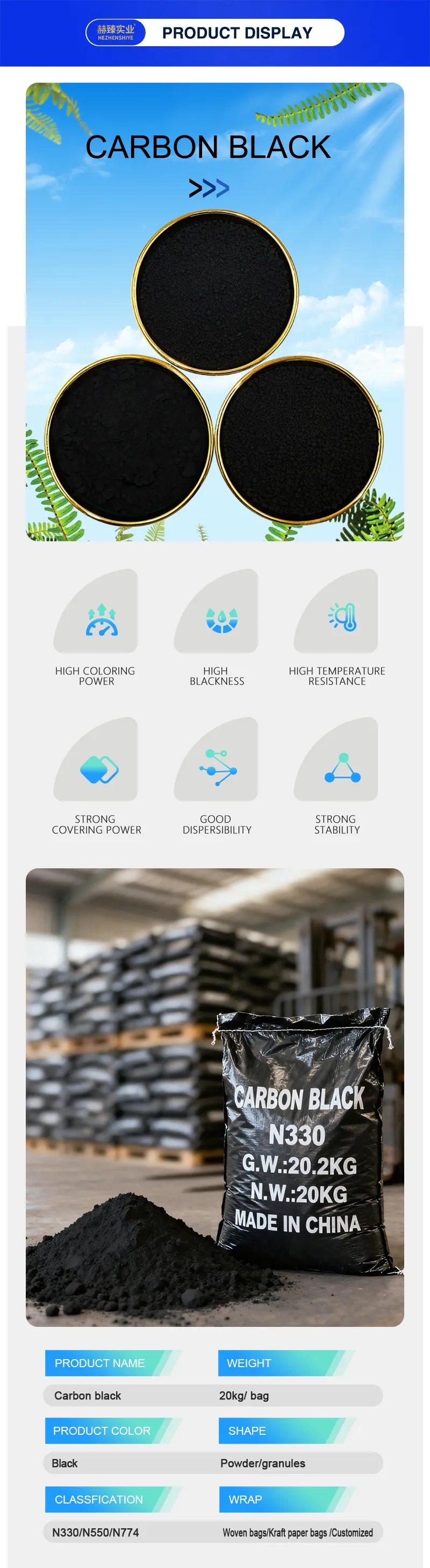
Carbon Black stands as irreplaceable cornerstone in modern industrial system, produced through controlled incomplete combustion of organic feedstocks—evolving from traditional petroleum derivatives to integrate bio-based resources like rapeseed oil, palm kernel oil, and agricultural residues such as corn cobs and wheat straw. This production evolution reflects industry’s shift toward sustainability while preserving core properties that make carbon black indispensable. Production process relies on precise control of combustion parameters: temperature variations adjust particle size, oxygen concentration shapes surface porosity, and feedstock composition determines chemical stability. Unlike unrefined soot from uncontrolled burning, carbon black undergoes post-processing steps including pelletization (to improve handling and reduce dust) and surface modification (to enhance dispersion in host materials). These refinements ensure consistency across batches, enabling it to meet demands from high-volume tire manufacturing to high-precision coating production.
Core properties of carbon black stem from its nanoscale structure: ultra-fine particles (ranging from 10 to 500 nanometers) create expansive surface area, while porous surface texture and particle aggregation form unique functional traits. Excluding conductivity, key attributes include reinforcement, tinting strength, UV resistance, dispersibility, and adsorption—each driving distinct industrial applications. Reinforcement arises from strong mechanical bonding between carbon black particles and polymer matrices (like rubber or plastic), strengthening molecular chains to resist wear and deformation. Tinting strength comes from ability to absorb all visible light wavelengths, delivering deep, uniform black hues that resist fading over time. UV resistance is critical for outdoor applications: carbon black absorbs harmful solar radiation, preventing polymer degradation like brittleness or discoloration. Dispersibility ensures even distribution in host materials, avoiding clumping that causes performance inconsistencies. Adsorption, enabled by porous surface, traps contaminants—useful in filtration and catalysis applications. These properties often work synergistically; for example, carbon black in outdoor plastics provides both UV resistance and tinting strength, while in tires it combines reinforcement and wear resistance.
Rubber industry remains largest consumer of carbon black, with tire manufacturing accounting for over half of global demand—and recent innovations have elevated its role beyond basic reinforcement. Tire treads, which endure constant friction with road surfaces, use carbon black grades optimized for abrasion resistance. A leading tire manufacturer in Southeast Asia developed a carbon black-silica hybrid filler system for passenger car tires; this blend reduced rolling resistance by 18% (boosting fuel efficiency) while maintaining 95% of abrasion resistance compared to pure carbon black. Electric vehicle tires, heavier than traditional counterparts, use high-structure carbon black (dense particle aggregation) to enhance tread rigidity—South Korean tire maker reported that these tires improved handling by 30% during wet road conditions. Off-road tires for construction equipment use carbon black with surface silanization to enhance cut resistance; Chinese construction firm noted that these tires withstood damage from sharp rocks 50% better than standard tires, reducing replacement costs by 40% annually.
Non-tire rubber applications have expanded into specialized sectors. Industrial seals for heavy machinery use carbon black reinforced with aramid fibers; American manufacturing firm reported that these seals maintained integrity at temperatures ranging from -50°C to 200°C, doubling service life in extreme environments. Conveyor belts for mining use carbon black with anti-static properties (achieved through particle aggregation, not conductive grading) to prevent dust buildup—Australian mining company eliminated three potential dust explosion risks in one year after adopting these belts. Waterproof rubber goods like marine gaskets use carbon black to enhance water resistance; Norwegian shipbuilding firm noted that gaskets with carbon black-reinforced rubber retained waterproofing for 15 years, compared to five years for non-reinforced versions. Even consumer rubber products like hiking boots use carbon black to improve tear resistance; Canadian footwear brand reported that boots with carbon black-infused rubber survived 1000 kilometers of rough terrain without tearing, twice as long as non-reinforced alternatives.
Plastic industry has leveraged carbon black to address two critical trends: sustainability and functional enhancement. Biodegradable plastics infused with carbon black have become viable for packaging—Dutch packaging firm developed a carbon black-polylactic acid (PLA) blend that degrades in industrial compost within eight months, while retaining color and strength during 12 months of product shelf life. Recycled plastics benefit significantly from carbon black’s reinforcement: Italian recycling firm reported that recycled polyethylene with 5% carbon black retained 90% of original tensile strength, up from 60% for unreinforced recycled plastic. This has expanded use of recycled plastic into heavy-duty applications like shipping crates—Brazilian logistics company reduced crate breakage by 45% after switching to carbon black-reinforced recycled plastic.
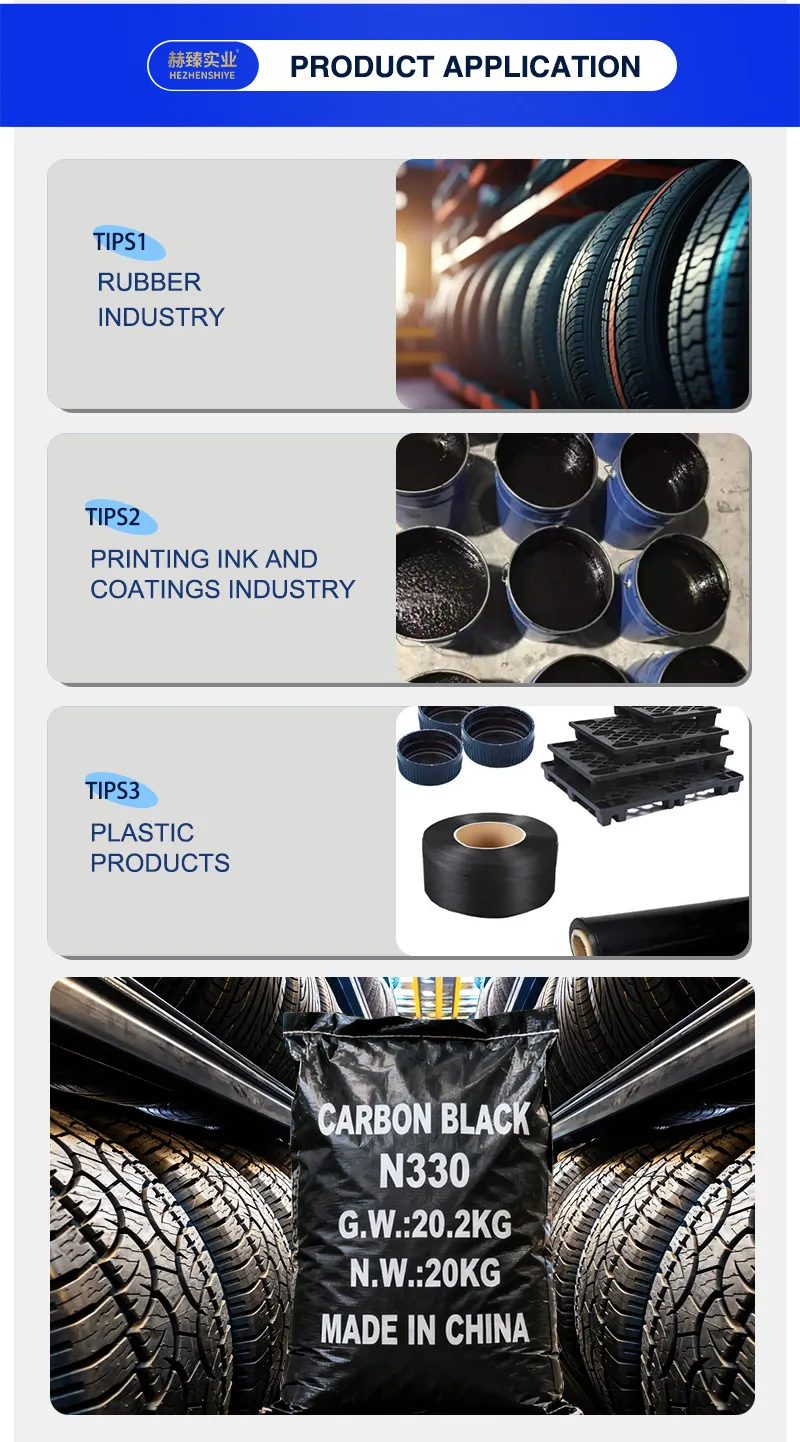
Innovative plastic applications include carbon black in 3D printing filaments. American 3D printing company developed a carbon black-ABS filament that creates parts with impact resistance comparable to aluminum—used by automotive suppliers for prototype components that withstand crash testing without cracking. Flame-retardant plastics for electrical enclosures use carbon black with bromine-free flame retardants; British electrical firm achieved UL94 V-0 flame rating with these plastics, meeting strict safety standards for industrial use. Agricultural plastics (excluding种植相关) like irrigation pipes use carbon black to resist UV damage—Brazilian farm reported that pipes with carbon black lasted 12 years, compared to four years for standard pipes, reducing replacement labor and costs. Flexible plastics like vinyl flooring use carbon black to enhance tear resistance; Turkish flooring manufacturer noted that carbon black-reinforced vinyl withstood 100,000 foot traffic cycles without tearing, doubling service life in high-traffic malls.
Coatings industry has transformed carbon black from simple pigment to multi-functional additive. Industrial coatings for offshore oil platforms use carbon black with zinc-rich primers; Norwegian oil firm reported that these coatings resisted saltwater corrosion for 18 years, triple the service life of standard coatings. This reduced maintenance downtime by 60% and extended platform operational life. Architectural coatings now include self-healing formulations with carbon black—Swiss paint manufacturer developed a carbon black-infused acrylic paint that repairs small cracks (up to 0.5 millimeters) when exposed to sunlight, reducing building maintenance costs by 25% annually. Heat-reflective coatings for roofing use carbon black with titanium dioxide; Mexican construction firm used these coatings on commercial buildings, lowering interior temperatures by 5°C and reducing air conditioning energy use by 30% during summer months.
Specialty coatings benefit from carbon black’s unique properties. High-temperature coatings for industrial furnaces use carbon black with ceramic fillers; German steel mill reported that these coatings withstood continuous exposure to 1200°C for five years, compared to two years for standard coatings. Decorative coatings for luxury furniture use carbon black with matte finish additives; Italian furniture brand noted that these coatings retained their deep black matte appearance for 10 years without fading, even with regular cleaning. Anti-graffiti coatings use carbon black with silicone additives; French municipal government applied these coatings to public buildings, reducing graffiti removal costs by 70% as paint could be washed off without damaging the underlying coating.
Printing ink industry has harnessed carbon black’s tinting strength and durability for high-performance applications. Digital printing inks use carbon black with nanoscale particles for sharp resolution—German printing firm achieved 1200 dpi resolution with these inks, enabling detailed printing of product labels with small text and barcodes. UV-curable inks with carbon black resist fading under outdoor exposure—Australian signage company reported that billboards printed with these inks retained color for four years, compared to one year for standard inks. Security inks use carbon black with fluorescent additives (activated by UV light); European banknote printer developed inks that glow green under UV light, enhancing counterfeit protection without compromising black appearance under normal light.
Industrial marking inks for metal parts use carbon black with epoxy binders—Japanese automotive supplier noted that these marks remained legible after heat treatment at 900°C and chemical cleaning, critical for part traceability in manufacturing. Packaging inks for non-food consumer goods (like cosmetics and electronics) use carbon black with low-migration additives; Korean cosmetics brand ensured compliance with EU packaging regulations, as carbon black did not migrate into product containers. Newspaper inks use carbon black with high dispersibility—Indian publishing house reduced printing waste by 15% as inks mixed evenly with paper fibers, avoiding smudging and uneven coverage.
Emerging applications are expanding carbon black’s reach beyond traditional industries, driven by global sustainability goals. Carbon capture and storage (CCS) uses carbon black as adsorbent—Canadian energy firm developed carbon black-based adsorbents that capture 92% of carbon dioxide from industrial flue gases, with regeneration capability for 1200 cycles before replacement. Water treatment uses carbon black in filters to remove heavy metals—South African water utility used these filters to treat industrial wastewater, reducing lead and arsenic levels to meet World Health Organization standards. Concrete enhancement uses carbon black as additive—Canadian construction firm added 3% carbon black to concrete for bridge decks, reducing cracking by 40% and extending service life by 20 years through improved tensile strength.
Catalyst support is another emerging application—German chemical firm used carbon black as support for catalysts in hydrogen production, improving catalyst efficiency by 25% due to high surface area and porous structure. Textile coatings for outdoor fabrics use carbon black to enhance UV resistance—American outdoor gear brand coated tent fabrics with carbon black-infused polyurethane, reducing UV penetration by 95% and preventing fabric degradation from sunlight. Even art conservation uses carbon black—Italian art restoration studio developed a carbon black-based pigment for restoring ancient paintings, as it matched the color and durability of historical pigments without fading.
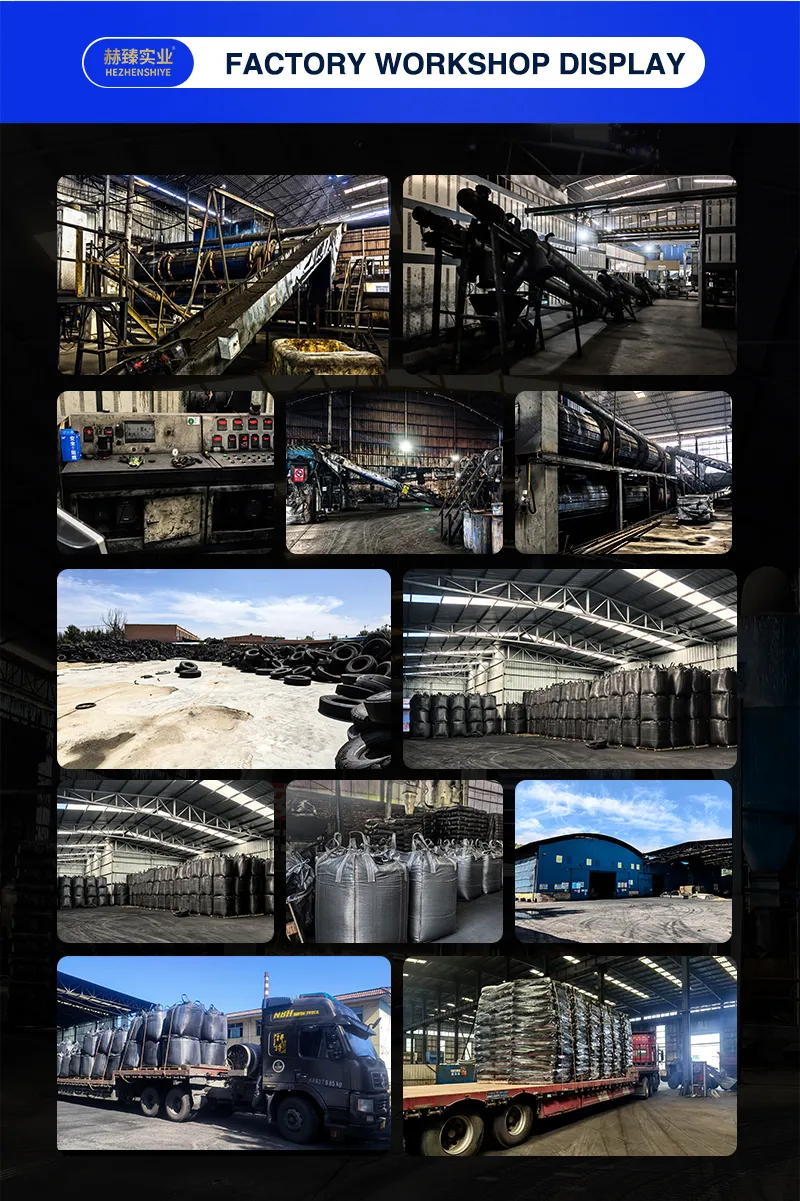
Sustainable production practices are reshaping carbon black manufacturing. Bio-based feedstocks have moved from research to commercialization—French carbon black producer operates a plant using 100% rapeseed oil as feedstock, reducing carbon footprint by 40% compared to petroleum-based production. Waste heat recovery systems are standard in modern plants—American plant captures 80% of heat generated during combustion, using it to generate electricity for on-site use and selling excess power to local grids. Pyrolysis of end-of-life tires recovers carbon black—Indian recycling firm processes 100,000 tons of tires annually, producing carbon black that meets industrial standards for use in rubber and plastic applications. This reduces landfill waste and conserves virgin feedstocks.
Circular economy initiatives involve collaboration across supply chains. Tire manufacturers have established closed-loop systems—Michelin’s “Tirecycle” program collects used tires, recovers carbon black through pyrolysis, and reuses it in new tire production. Plastic manufacturers use recycled carbon black in packaging—Coca-Cola’s European division uses 15% recycled carbon black in plastic bottles, reducing virgin material use. Industry associations like International Carbon Black Association (ICBA) have developed sustainability certifications, recognizing producers that meet strict emissions and recycling standards. These certifications help buyers identify eco-friendly carbon black grades for their products.
Global market dynamics reflect regional industrial trends. Asia Pacific dominates with 60% of global demand, fueled by automotive and construction industries. China leads in production and consumption—tire manufacturing growth has increased carbon black demand by 20% annually, while construction boom drives use in plastics and coatings. India’s infrastructure development boosts demand for carbon black-reinforced concrete and pipes—paint manufacturers have expanded capacity by 25% to meet rising needs. Europe focuses on sustainable grades—German and French producers lead in bio-based carbon black, with demand growing by 25% annually as brands seek eco-friendly materials. North America emphasizes high-performance grades—automotive and aerospace ground equipment (adhering to aviation exclusion) drive demand for specialty carbon black grades.
Latin America and Middle East Africa are emerging markets. Brazil’s agricultural machinery production boosts demand for carbon black-reinforced rubber seals and hoses—local carbon black producers have expanded plants to reduce import reliance. Saudi Arabia’s construction sector drives demand for carbon black-infused plastics and coatings—government infrastructure projects have increased carbon black imports by 30% in two years. Regional supply chains are developing, with producers building plants near feedstock sources (like bio-based oil refineries) to reduce transportation costs and carbon emissions.