

Natural Talc That Quietly Lifts Performance in Cable Paper, Coatings, Paint, and Rubber
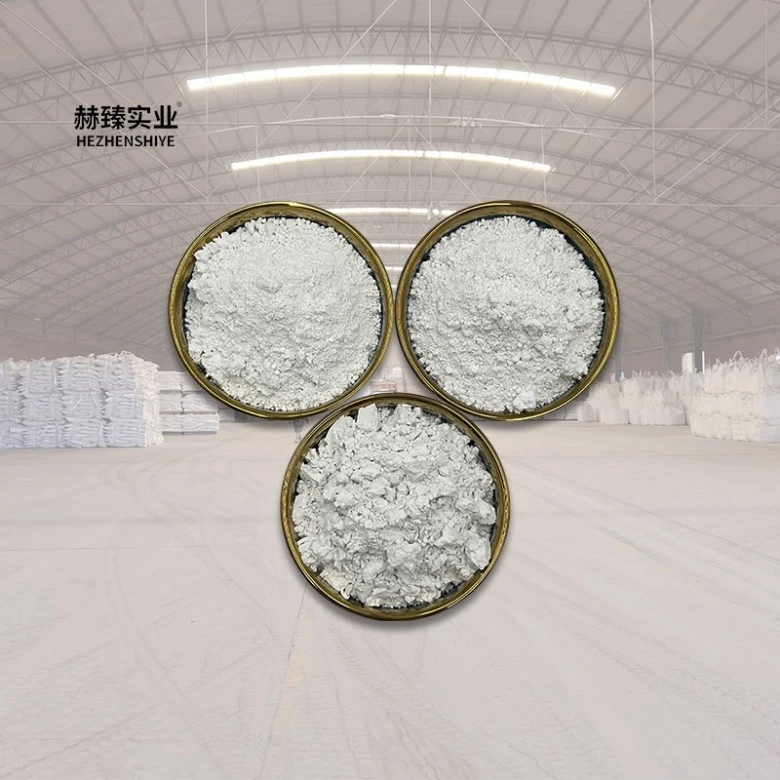
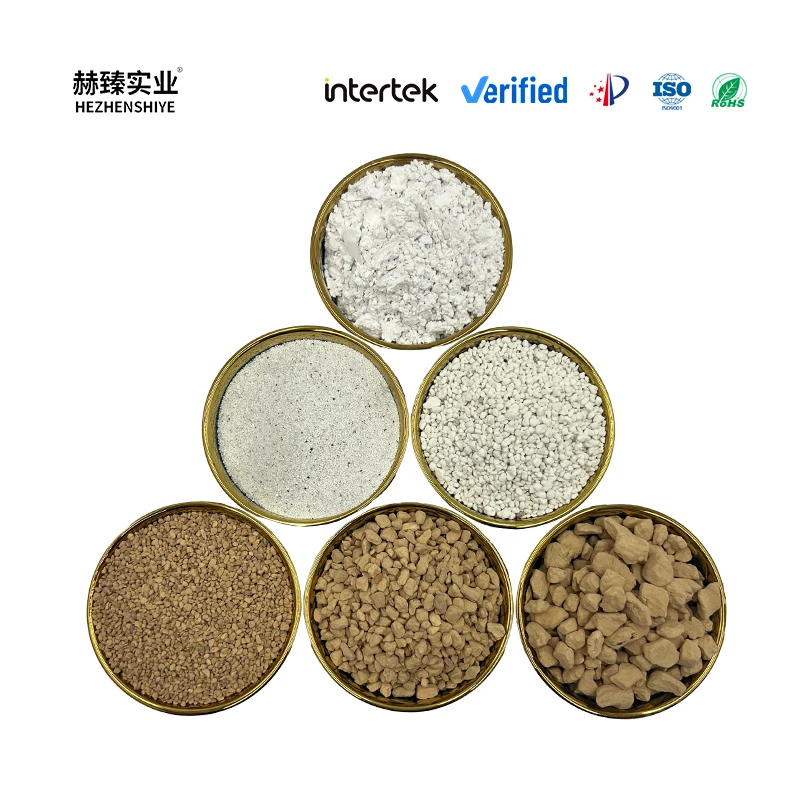
I’ve walked enough mills and lab corridors to know when a filler isn’t just a filler. Hezhen Natural Talc Powder for Cable Paper Making Coating Painting Rubber Industry is one of those quiet performers that, surprisingly, engineers fight to keep in the formula.
Industry snapshot
Coatings are under low-VOC pressure, cable paper makers chase dielectric stability, and rubber mixers want higher filler loadings without killing elongation. Fine, clean talc has moved from “commodity” to “spec-critical.” Many customers say consistency now beats absolute whiteness—though both matter, frankly.
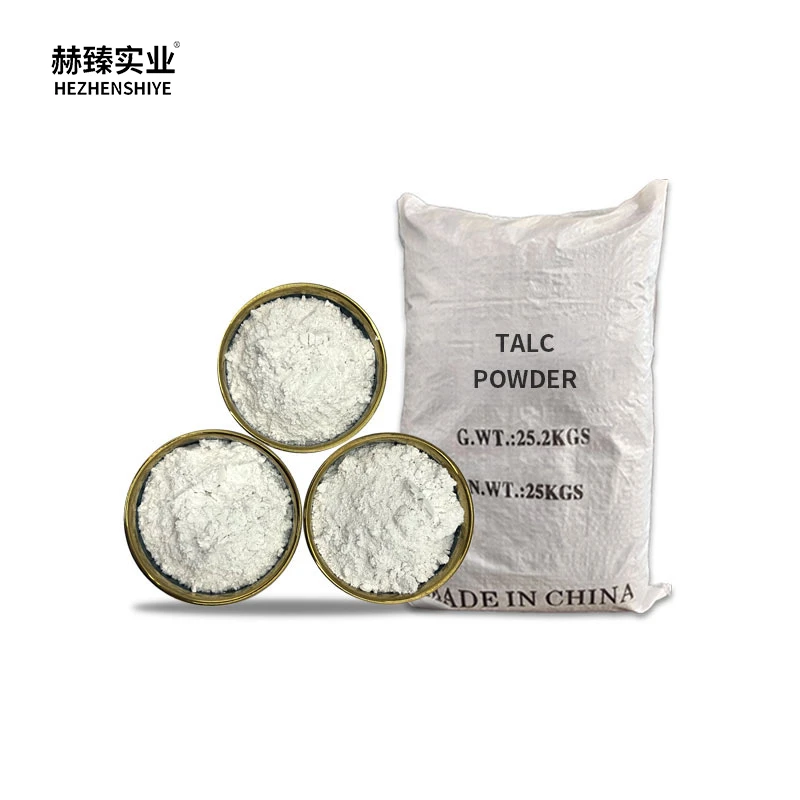
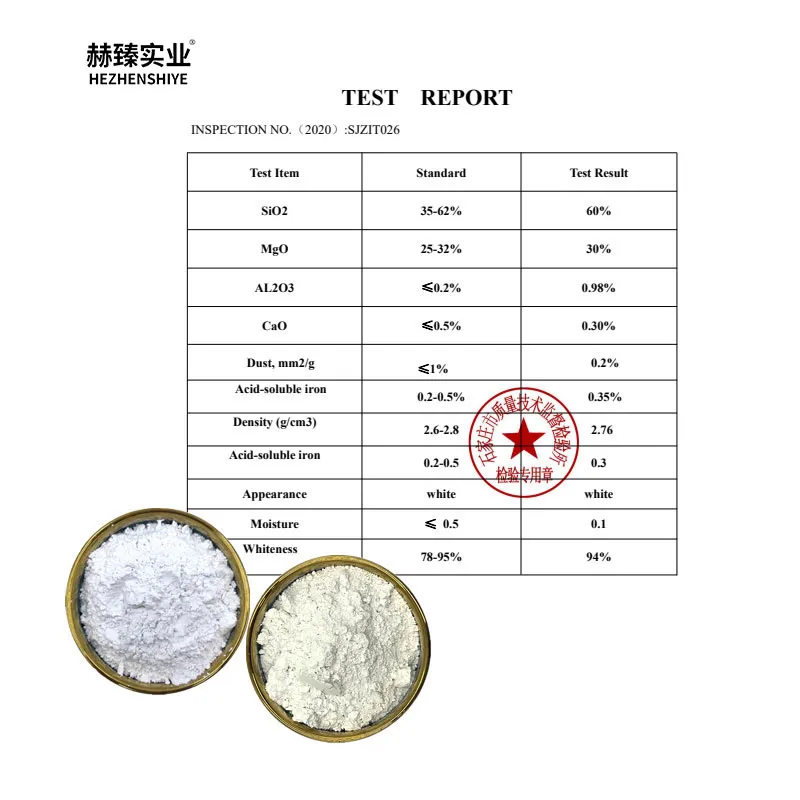
Product specs (typical, real-world use may vary)
| Parameter | Typical value | Test method |
|---|---|---|
| Median particle size (D50) | ≈ 5–12 μm (grades available to D50 ≈ 2–4 μm) | ISO 13320 laser diffraction |
| Whiteness | ≥ 90–94 | ISO 7724/1-3 |
| Oil absorption | ≈ 25–35 g/100 g | ASTM D281 |
| Moisture | ≤ 0.5% | ISO 787-2 |
| pH (10% slurry) | ≈ 8.5 | ISO 787-9 |
| LOI at 1000°C | ≈ 5–6% | ISO 787-3 |
| Asbestos screening | ND (<0.1% by XRD) | ISO 22262-1 |
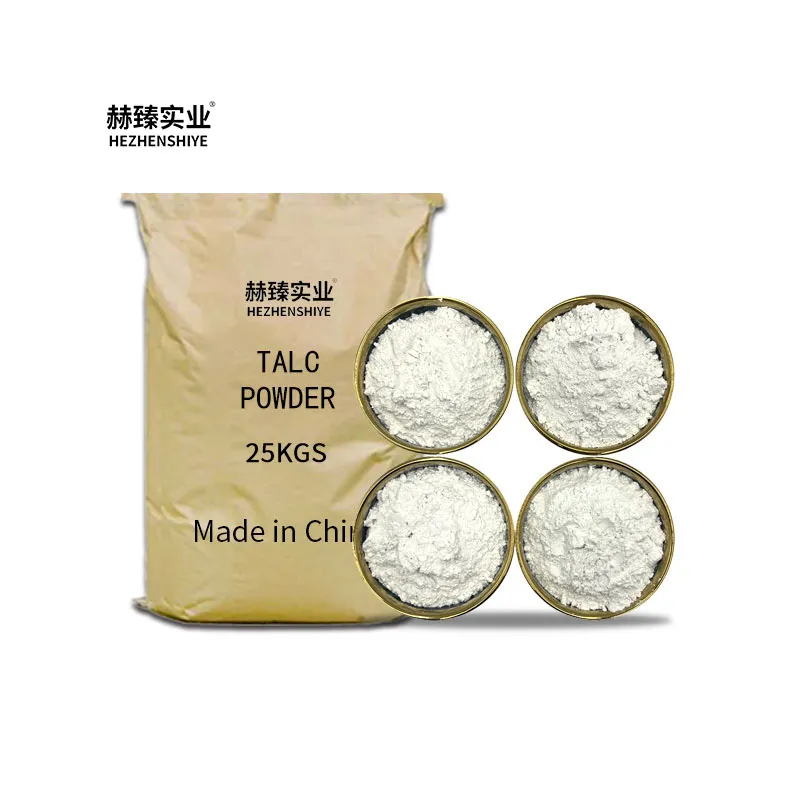
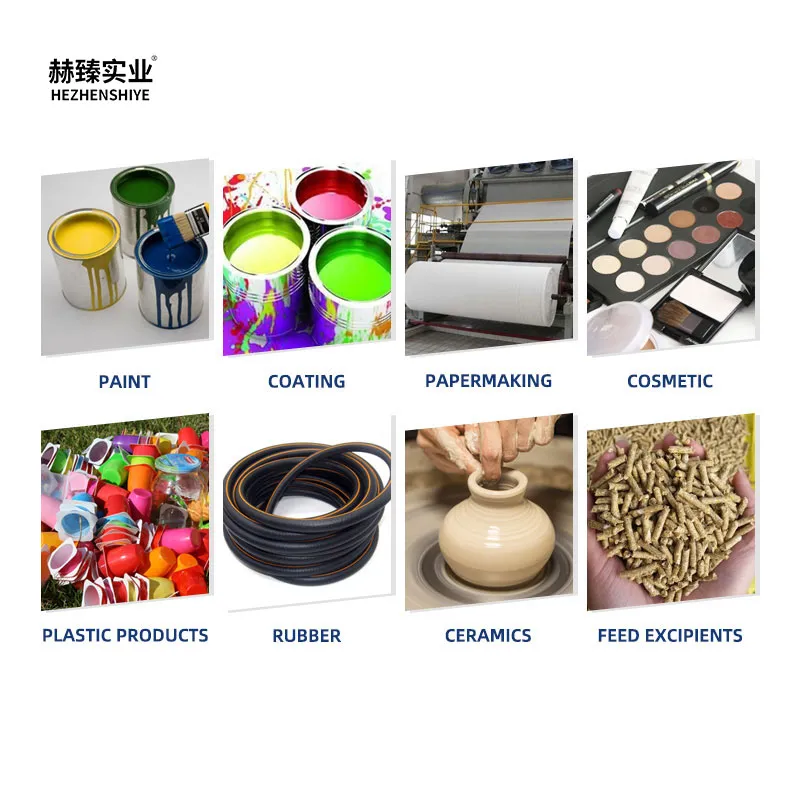
Where it works (and why)
- Cable paper: improves dielectric strength and dimensional stability; smoother calendering finish.
- Coatings/paint: anti-settling, sheen control, scrub resistance; lower VOC via higher solids.
- Rubber: reinforcement and antiblocking; better heat aging and extrusion flow.
Origin: No. 8 Xisha East Road, Shikan Village, Ciyu Town, Lingshou County, Shijiazhuang, Hebei.
Process flow and QA
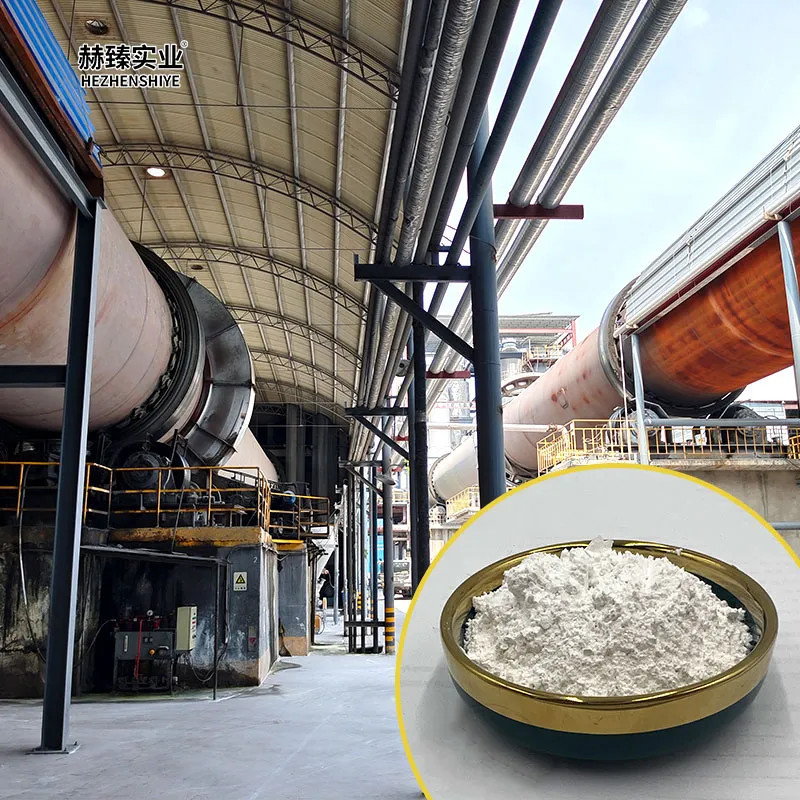
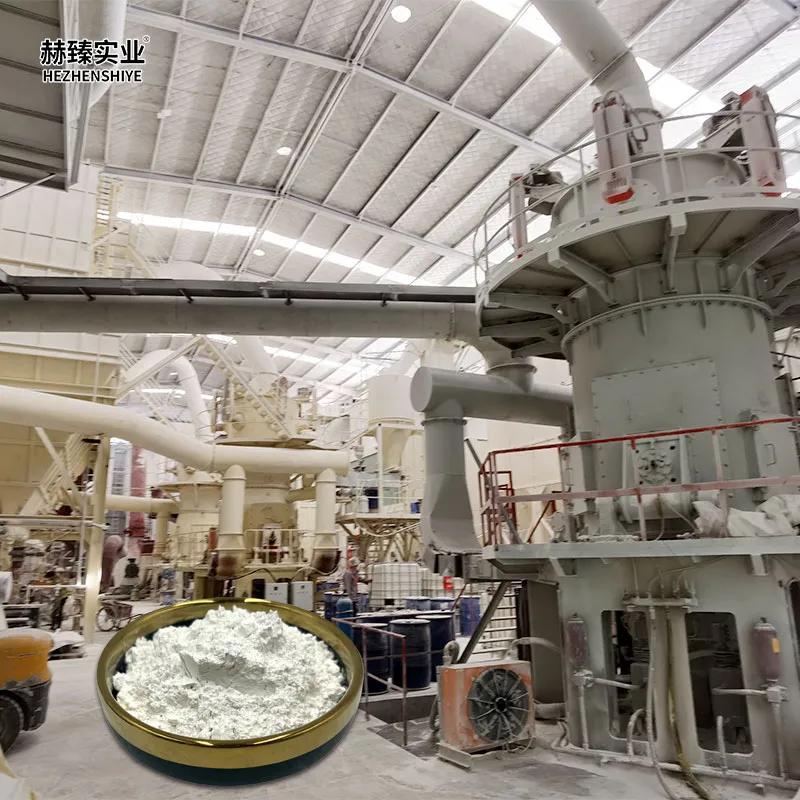
Mining → selective ore sorting → crushing → jet milling → air classification → optional surface treatment (e.g., stearic acid for polymers) → sieving → metal detection → packing. QC checkpoints: PSD (ISO 13320), whiteness (ISO 7724), moisture (ISO 787-2), LOI, pH, oil absorption (ASTM D281), asbestos check (ISO 22262-1). Service life impact: in coatings, reduced chalking over 12–24 months outdoor exposure; in rubber, stable modulus after 72 h at 100–120°C (shop-floor data, I guess conservative).
Certifications and compliance
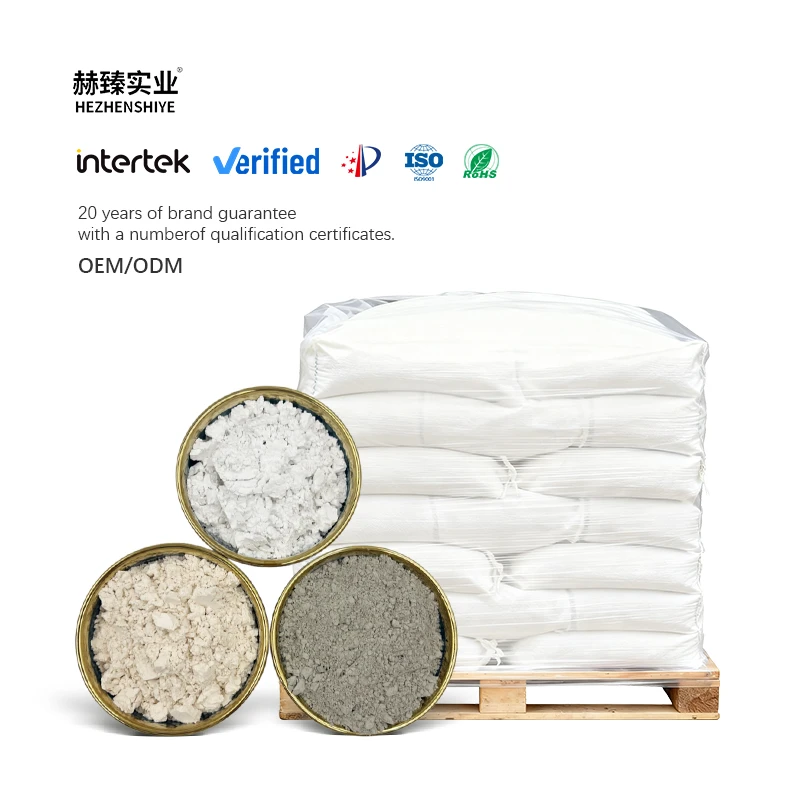
ISO 9001 QMS, REACH prereg/notification for EU shipments, RoHS alignment for electrical applications (documentation on request). Packaging traceability with batch COA—many customers say that’s what keeps their audits calm.
Vendor comparison (snapshot)
| Vendor | Particle size control | Whiteness | Certs | Customization | Lead time |
|---|---|---|---|---|---|
| Hezhen Natural Talc Powder for Cable Paper Making Coating Painting Rubber Industry | Tight (D50 2–12 μm) | 90–94 | ISO 9001, REACH | Surface-treated, PSD-tailored | ≈ 7–15 days |
| Generic Vendor A | Moderate | 88–91 | Basic | Limited | ≈ 15–25 days |
| Import Brand B | Very tight | 92–95 | ISO, extra audits | Yes | ≈ 20–35 days |
Customization and real cases
- Cable paper mill, Southeast Asia: switching to Hezhen Natural Talc Powder for Cable Paper Making Coating Painting Rubber Industry cut corona discharge rejects by ~12% (per IEC 60243 tests).
- Architectural paint maker, EU: D50 ≈ 4 μm grade lifted scrub resistance by ~8% while holding PVC constant.
- EPDM compounder: surface-treated talc allowed +5 phr loading without losing tensile beyond 2%—honestly, better than I expected.
How to specify
Share application, target PSD, whiteness floor, moisture cap, and any surface treatment need. For cable paper, align tests with IEC 60243; for coatings, run KU viscosity, Hegman fineness, and ASTM scrub cycles; for rubber, Mooney ML(1+4) and tensile/elongation after heat aging.
Final note: supply reliability matters as much as microns. Hezhen Natural Talc Powder for Cable Paper Making Coating Painting Rubber Industry ships with batch COAs and predictable PSD—nothing flashy, just steady, which is what production likes.
References
- ISO 13320:2020 Particle size analysis—Laser diffraction methods.
- ASTM D281: Oil Absorption of Pigments by Spatula Rub-Out.
- ISO 787 series: General methods of test for pigments and extenders.
- ISO 22262-1: Bulk materials—Determination of asbestos.
- IEC 60243-1: Electric strength of insulating materials—Test methods.