

Iron oxide pigments for infrastructure eco friendly coating terrazzo coloring color stability weather resistance outdoor sculpture coloring recycled rubber coloring interior decoration
2025.12.03
Iron Oxide Pigments emerge as eco friendly coloring materials that bridge Sustainable Living and Circular Economy, adapting innovatively to diverse demands of Green Infrastructure, Terrazzo Coloring, and Outdoor Sculpture Coloring. Unlike synthetic pigments relying on toxic chemical synthesis—often releasing volatile organic compounds during production and fading rapidly under environmental stress—Iron Oxide Pigments originate from natural iron ore deposits or eco friendly synthetic processes using industrial waste like steel slag and metal pickling liquor. This unique origin endows them with inherent Color Stability and exceptional Weather Resistance, traits that outperform conventional coloring agents such as organic dyes (prone to bleeding) and low grade inorganic pigments (susceptible to discoloration). Serving as core component in Eco Friendly Coating, Recycled Rubber Coloring, and Interior Decoration, Iron Oxide Pigments transcend single function roles to become multi purpose solutions blending natural earthy hues, reliable performance, and environmental responsibility that aligns with global sustainability trends.
Resource foundation of Iron Oxide Pigments combines natural abundance and circular value, with regional deposits boasting distinct traits tailored to new applications. Natural Iron Oxide Pigments are extracted from iron ore deposits rich in hematite (vivid red hues), goethite (warm yellow hues), and limonite (earthy brown hues)—South American iron ore veins yield hematite with high light fastness and intense saturation, ideal for Terrazzo Coloring requiring long lasting gloss and color consistency; Middle Eastern sedimentary deposits produce goethite with soft, muted yellow tones perfect for Interior Decoration in residential spaces; North American limonite deposits offer coarse particles suited for Outdoor Sculpture Coloring needing strong adhesion to concrete. Synthetic Iron Oxide Pigments are produced via controlled chemical reactions using iron rich byproducts: steel slag, once dumped in landfills, is processed to extract iron oxides through magnetic separation and low temperature leaching; metal pickling liquor, a waste stream from steel refining, is neutralized with natural limestone to precipitate iron oxide crystals. These processes turn industrial waste into high value coloring materials, reducing landfill burden and conserving virgin resources.
Extraction and production adhere to strict eco friendly standards to minimize environmental impact. Natural mining adopts surface extraction methods to avoid deep geological disturbance that could damage aquifers or soil ecosystems; mined areas undergo systematic restoration by replanting native vegetation—drought resistant cacti and shrubs in South American arid mining zones, and grasslands in North American temperate deposits—to stabilize soil and restore local biodiversity. Synthetic production uses closed loop systems: exhaust gases from chemical reactions are captured and converted into industrial CO2 for greenhouse cultivation; wastewater is treated via sedimentation and filtration, then reused in production or released as clean water meeting local discharge standards. Circular Economy is further embodied in waste reuse: pigment production residues, which retain partial coloring ability and particle structure, are ground into ultra fine powder and mixed into Recycled Rubber Coloring—blended with recycled rubber to create outdoor floor tiles, or added to rubber mulch to enhance UV resistance and color consistency.
Production processes of Iron Oxide Pigments focus on preserving core traits and adapting to new application needs, with targeted innovations reducing carbon footprint. Natural pigments undergo physical processing that avoids chemical degradation: ore is first crushed into coarse particles using low energy jaw crushers, then refined via low temperature airflow grinding—this method controls particle collision intensity to retain the crystal structure critical for Color Stability, unlike high temperature grinding that can damage pigment integrity. Multi stage air classification follows, separating pigments into different particle sizes: fine particles for Terrazzo Coloring (ensuring uniform dispersion in cement and aggregate mixtures), medium particles for Interior Decoration (enabling smooth application in paints), and coarse particles for Outdoor Sculpture Coloring (ensuring strong bonding with concrete substrates). No toxic chemicals are used throughout natural processing, retaining the pigments’ natural purity and non toxic nature.
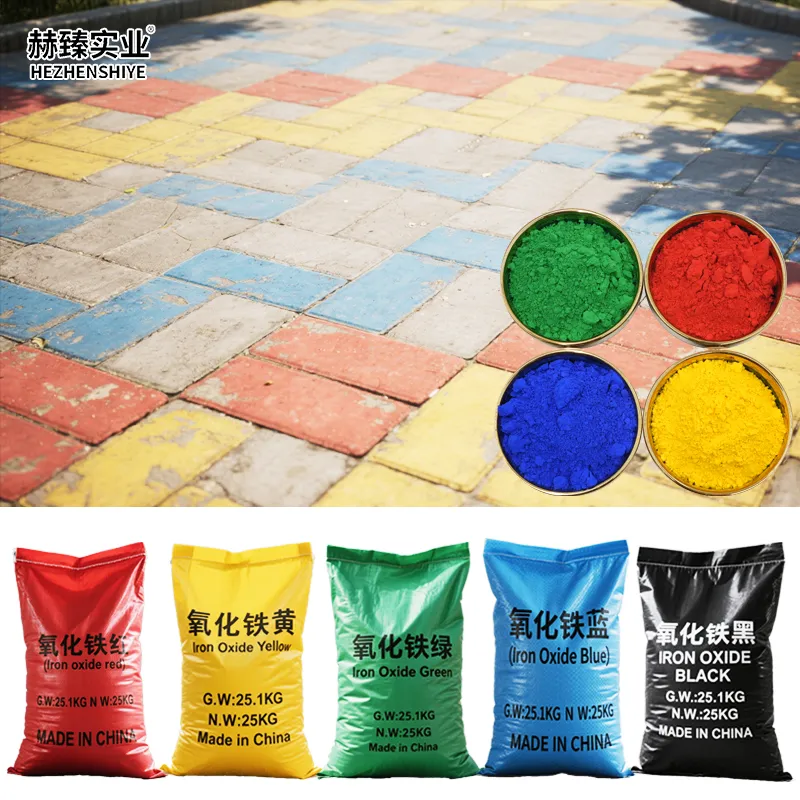
Synthetic pigments use low temperature chemical reactions (operating at moderate temperatures to avoid energy intensive heating) to control particle size and color shade. pH adjustment is achieved via natural minerals like limestone instead of harsh acids that corrode equipment and pollute water. Post production treatment includes eco friendly surface modification tailored to end uses: pigments for Terrazzo Coloring are coated with natural silicate compounds to enhance adhesion to cement and resist alkali induced discoloration; those for Interior Decoration are treated with plant based waxes to improve dispersion in water based paints and create matte or glossy finishes; pigments for Outdoor Sculpture Coloring are coated with zinc silicate (a natural mineral) to boost weather resistance and prevent fading. Solar powered drying systems, supplemented by wind energy in coastal production facilities, replace fossil fuels in final processing, cutting carbon emissions by significant margin compared to traditional coal fired dryers.
Core properties of Iron Oxide Pigments make them irreplaceable across new industries, with each trait aligned to practical application demands. Color Stability stems from stable iron oxygen chemical bonds that resist breakdown under ultraviolet radiation, heavy rain, and extreme temperature fluctuations—unlike organic pigments that fade within months, Iron Oxide Pigments maintain consistent hue in outdoor Terrazzo Coloring (such as shopping mall floors) and Outdoor Sculpture Coloring for decades. Weather Resistance is enhanced by their dense particle structure, which repels water and blocks salt spray penetration—coastal Green Infrastructure projects using pigmented Eco Friendly Coating retain color and integrity even in salt rich environments, while Outdoor Sculpture Coloring resists cracking and discoloration in freezing or scorching climates.
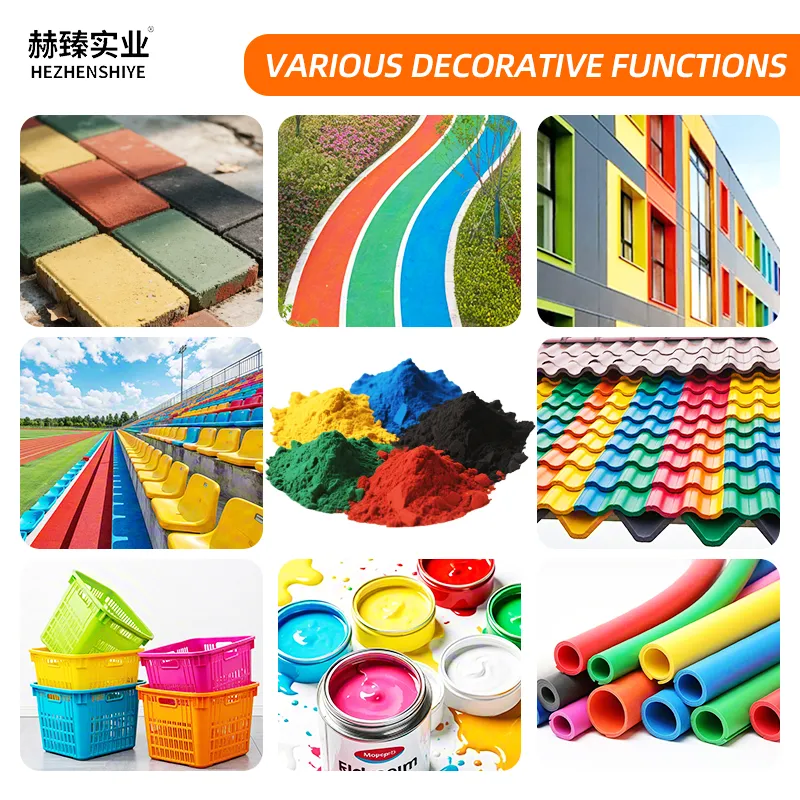
Chemical inertness ensures compatibility with diverse substrates: mixed into cement and aggregates for Terrazzo Coloring, they do not react with cement alkalinity or affect structural strength; added to water based or oil based binders for Interior Decoration, they avoid discoloration from binder aging; blended into concrete for Outdoor Sculpture Coloring, they do not degrade under long term exposure to air and moisture. Non toxic nature makes them suitable for public spaces and residential environments—Interior Decoration in children’s rooms, Terrazzo Coloring in school corridors, and Recycled Rubber Coloring in playground floor tiles all meet global safety standards for non toxicity and low volatile organic compound emissions. Additional traits like wear resistance (critical for Terrazzo Coloring in high traffic areas) and UV absorption (beneficial for Outdoor Sculpture Coloring) further expand their application scope.
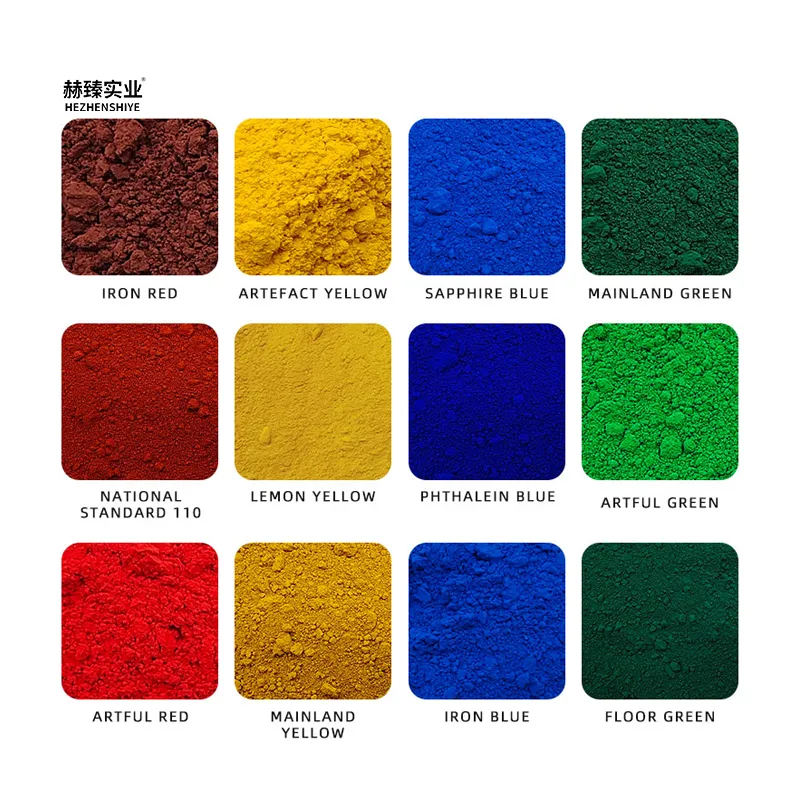
Iron Oxide Pigments excel in diverse novel application scenarios, with real world projects showcasing their versatility and performance. Green Infrastructure leverages their Weather Resistance and Color Stability in municipal projects: city planners in Europe use yellow goethite pigments to color Terrazzo Coloring for pedestrian plazas, creating bright, durable surfaces that resist scuffs and fading; coastal cities in Asia apply red hematite pigmented Eco Friendly Coating to seawall panels, protecting against salt corrosion while adding visual appeal. Terrazzo Coloring is a standout commercial application: luxury shopping malls and hotels use mixed iron oxide pigments (red hematite, yellow goethite, and brown limonite) to create custom Terrazzo Coloring patterns, replacing imported natural stones and reducing carbon footprint from transportation.
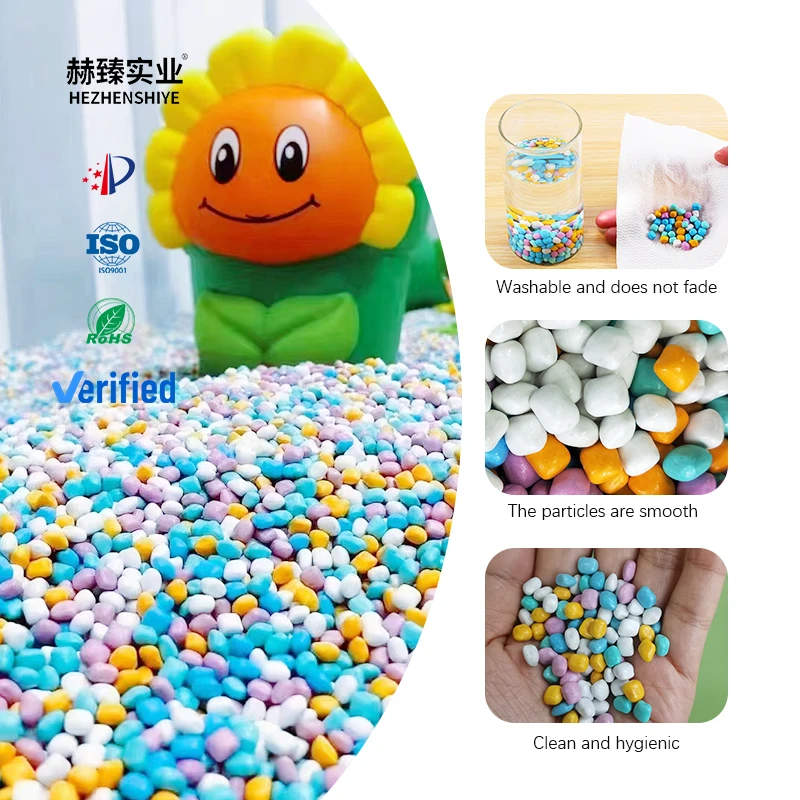
Outdoor Sculpture Coloring finds favor among artists and urban planners: sculptors in North America mix brown limonite pigments with concrete to craft large scale outdoor artworks, which retain their earthy tones even after years of rain and sunlight; city councils use black magnetite pigments to color concrete sculptures in parks, creating bold contrasts with surrounding greenery. Recycled Rubber Coloring revitalizes waste materials: rubber recycling facilities mix iron oxide pigments into recycled rubber granules to produce outdoor floor tiles for playgrounds and sports courts—red and yellow pigments create vibrant, fade resistant surfaces that cushion falls; garden centers use pigmented recycled rubber mulch to cover plant beds, adding color while suppressing weeds. Interior Decoration integrates them into diverse styles: homeowners use soft yellow goethite pigmented paints for living rooms to create warm atmospheres; designers use deep red hematite pigments in textured wall coatings for restaurant interiors, adding rustic charm.
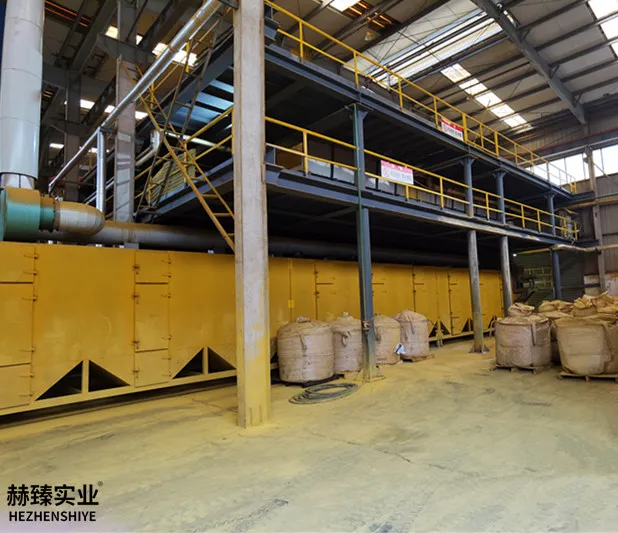
Quality control of Iron Oxide Pigments is tailored to specific new applications, ensuring consistent and reliable performance. For Terrazzo Coloring, tests include wear resistance (abrasion tests using standardized machines to simulate high traffic), color fastness (exposing pigmented Terrazzo Coloring samples to simulated sunlight and rain for extended periods), and dispersion uniformity (inspecting Terrazzo Coloring slabs for streaks or uneven color). For Outdoor Sculpture Coloring, UV resistance tests expose pigmented concrete samples to intense ultraviolet light for months to verify no fading; adhesion tests check bonding strength to ensure pigments do not peel off. For Eco Friendly Coating, chemical resistance tests expose pigmented coatings to salt water and industrial pollutants, with samples required to retain integrity and color; film thickness tests ensure uniform coverage.
For Recycled Rubber Coloring, heat stability tests expose pigmented rubber samples to high temperatures to confirm no color change; flexibility tests bend samples repeatedly to avoid cracking. For Interior Decoration, toxicology tests comply with global standards—ensuring no heavy metal leaching or volatile organic compound release; color consistency is measured via spectrophotometry to ensure batch to batch uniformity. Both natural and synthetic pigments undergo particle size analysis via laser diffraction to match substrate requirements. Recycled pigment waste undergoes strict purification: magnetic separation removes metal impurities, followed by sieving to ensure particle size consistency, and final performance tests (matching color stability and dispersion standards of virgin pigments) before reuse in less demanding applications like decorative aggregates.
In conclusion, Iron Oxide Pigments stand as cornerstone eco friendly coloring materials aligning seamlessly with Sustainable Living and Circular Economy. Their natural ore origin or waste derived synthetic production, paired with eco friendly processing, preserves core traits of Color Stability, Weather Resistance, and chemical inertness—traits that drive unique value in Green Infrastructure, Terrazzo Coloring, Outdoor Sculpture Coloring, Eco Friendly Coating, and Recycled Rubber Coloring. Unlike toxic synthetic pigments that persist in ecosystems (contaminating soil and water) and harm human health (via volatile emissions), Iron Oxide Pigments’ entire lifecycle minimizes environmental impact: from responsible surface mining and waste recycling in production to reusable residues and non toxic end products.
Novel applications demonstrate their remarkable adaptability: enhancing commercial spaces via durable Terrazzo Coloring, enriching urban landscapes through long lasting Outdoor Sculpture Coloring, protecting critical infrastructure with Eco Friendly Coating, and reducing waste by revitalizing recycled rubber. As global demand for eco friendly, long lasting coloring materials grows—fueled by stricter environmental regulations in Europe, Asia, and North America, as well as consumer preference for sustainable, non toxic products—Iron Oxide Pigments are poised to expand their market reach across industries. Ongoing research into nano sized Iron Oxide Pigments and bio based surface modifiers promises even greater performance, such as enhanced dispersion in ultra thin coatings and improved compatibility with biodegradable polymers, ensuring they remain vital choice for connecting natural resources and industrial innovation in sustainable, functional ways.