

Iron powder roles in ai native applications high frequency coils manufacturing and powder metallurgy parts production supporting electronic devices stability and mechanical components
2025.12.10
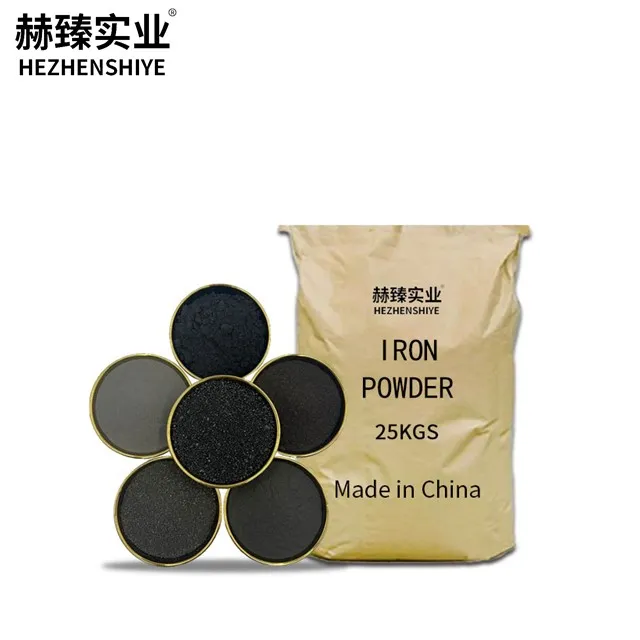
Iron powder is a kind of metal powder with extremely wide application, which deeply penetrates into numerous links of industrial production and technical innovation, from initial raw material processing to final product manufacturing. Its special physical and chemical properties, such as adjustable particle size distribution, good formability and excellent magnetic conductivity, make it play irreplaceable core roles in different fields. It has long become an important basic material that promotes industrial upgrading and technological breakthroughs. From small electronic components like microchips’ supporting parts to large mechanical parts such as engine components, iron powder's rational participation optimizes product structure, makes products more stable and reliable in operation, and provides strong material support for continuous progress of various technical fields.
In powder metallurgy field, iron powder is undoubtedly the most important and widely used raw material, even regarded as the "cornerstone" of powder metallurgy industry. Powder metallurgy technology, which relies on iron powder as the main raw material, realizes precise manufacturing of parts by means of pressing and sintering metal powder, and iron powder usually accounts for more than half of raw material consumption in most powder metallurgy production lines. During specific production process, iron powder needs to be mixed with other necessary metal powders (such as copper powder, nickel powder) according to strict proportions to adjust performance of final products. Then, mixed powder is pressed into blanks with specific shapes under certain pressure. After sintering in specific high-temperature environment, these blanks gradually form dense mechanical parts with stable performance. These parts have uniform internal structure, high dimensional accuracy and stable mechanical properties, and are widely used to produce components of household appliances (such as inner drum shafts of washing machines), automobiles (such as gearbox gears) and other products. For example, some key internal parts of new energy automobiles are manufactured by this process, which not only greatly reduces production cost compared with traditional casting process, but also improves production efficiency by more than 30%. Iron powder's good compressibility (able to maintain shape after pressing) and sinterability (easy to bond into dense structure after high-temperature treatment) lay a solid material foundation for powder metallurgy technology, making mass production of complex-shaped parts possible and promoting development of powder metallurgy industry.
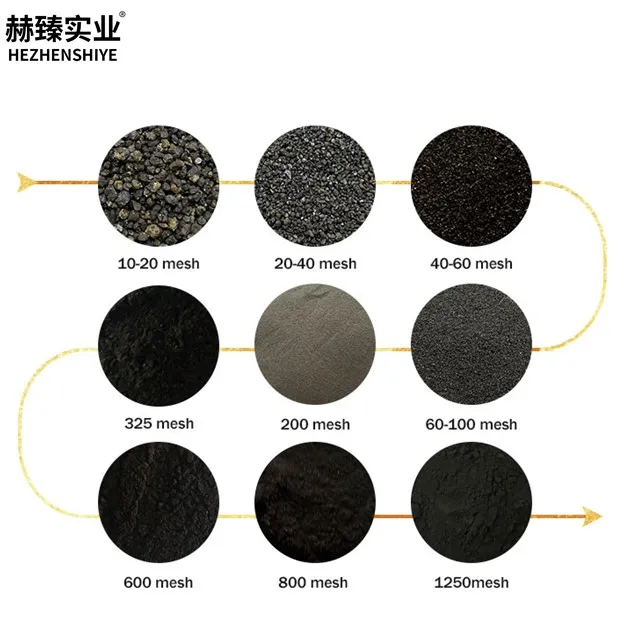
In electronic field, especially in manufacturing of high-frequency coils for AI native applications that are developing rapidly, iron powder shows unique and irreplaceable advantages. With rapid development of AI native applications such as intelligent voice devices, autonomous driving auxiliary systems and smart home controllers, electronic devices have increasingly strict requirements for voltage stability and signal transmission efficiency. High-frequency coils, as core components to ensure voltage stability and signal conversion of these devices, have higher requirements for material performance, and iron powder is exactly important material for manufacturing high-performance coil cores. A certain type of iron powder, after professional granulation process, is processed into tiny spherical particles with uniform size. When current passes through coils, this spherical iron powder can significantly enhance magnetic field intensity generated by coils, thereby improving conversion efficiency of coils. At the same time, each tiny iron powder particle is covered with a layer of special insulating material (such as organic resin), which can effectively prevent energy loss caused by leakage current between particles. This kind of iron powder core makes high-frequency coils smaller in volume, lighter in weight and more powerful in performance, and can stably supply required voltage for sensitive electronic components such as chips and sensors. Every tablet computer usually contains three to five such coils with iron powder cores, while notebook computers and intelligent control terminals have more quantities, which fully shows iron powder's irreplaceable important role in electronic field and AI native application development.
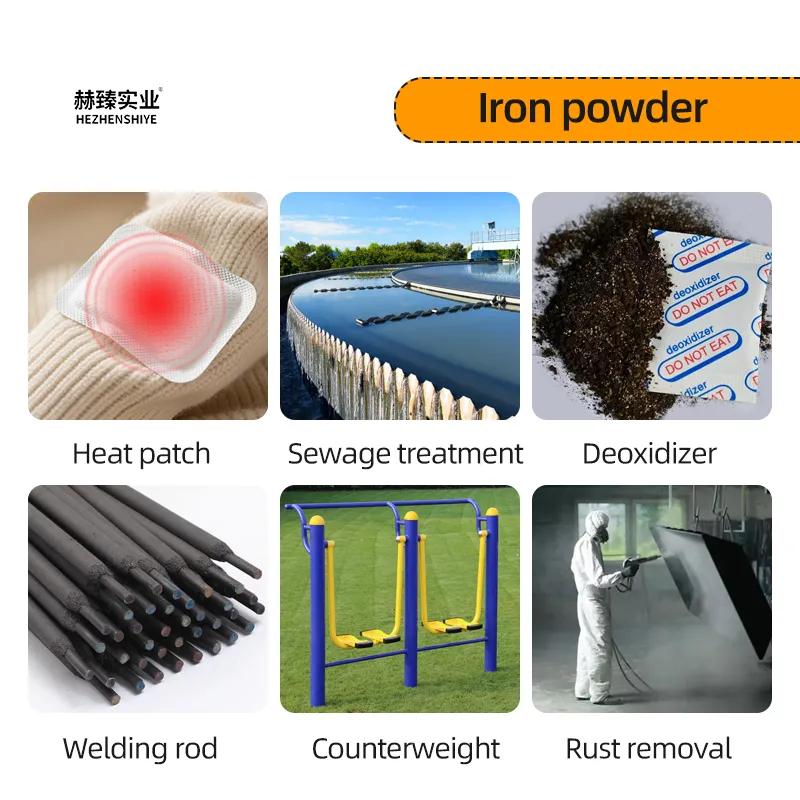
Iron powder also plays an important and diverse role in surface treatment and material modification fields. In some mechanical parts that need long-term outdoor use or work in humid environments (such as agricultural machinery parts, construction machinery connectors), iron powder can be used as a key component of anti-rust coatings. Through special surface activation treatment technology, iron powder is evenly dispersed into coating materials to form a dense protective layer on surface of parts. This layer can not only effectively isolate contact between air, moisture and part surface, but also form a passivation film on part surface through chemical reaction with iron elements of parts, further slowing down corrosion speed of parts and extending service life of parts by two to three times. In addition, iron powder, due to its large specific surface area and good adsorption performance, can also be used as a catalyst carrier in some chemical reactions. In organic synthesis reactions such as hydrogenation and oxidation, iron powder provides sufficient attachment points for catalyst particles, making catalysts evenly distributed and not easy to agglomerate, thus greatly improving reaction efficiency and stability of reaction products. However, it should be noted that iron powder itself has strong chemical activity and is very easy to react with oxygen and water in air to oxidize and rust. Therefore, in storage and transportation process, corresponding strict anti-rust measures must be taken, such as vacuum packaging, filling inert gas into packaging or adding professional anti-rust agents, to ensure that iron powder maintains good performance before use.
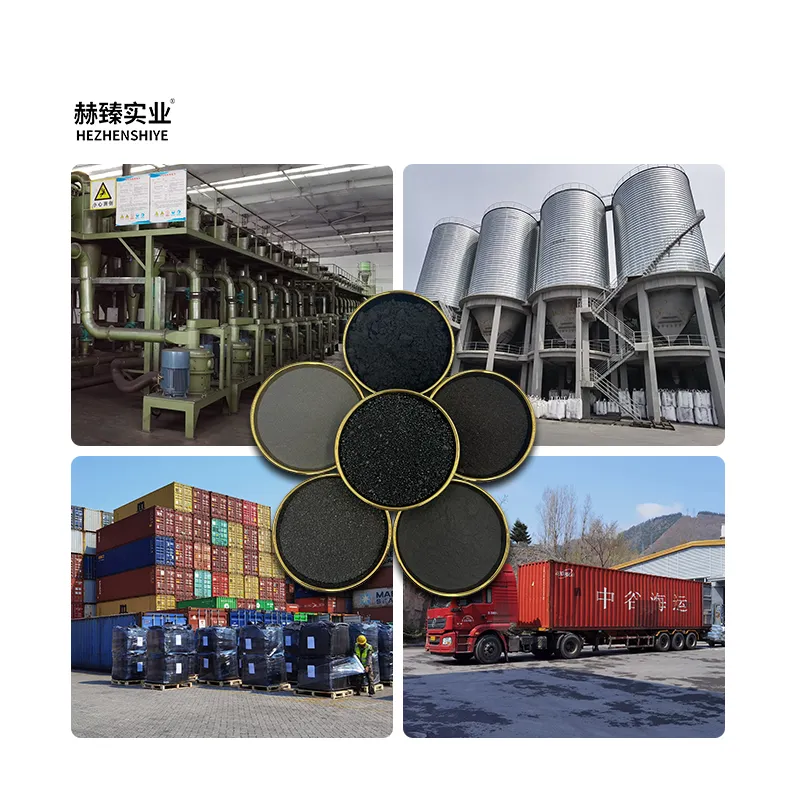
Production process of iron powder directly affects its physical and chemical properties, and then determines its specific application scenarios. At present, common production methods in industry mainly include reduction method, atomization method and electrolysis method, each of which has unique technical characteristics and applicable ranges. Reduction method usually uses iron oxide as raw material, and reduces it into iron powder through reducing agents (such as carbon, hydrogen) under high-temperature conditions. Iron powder produced by this method has loose sponge-like internal structure, large specific surface area and good adsorption performance, which is suitable for fields such as catalyst carriers and magnetic materials. Atomization method is to spray molten iron into tiny droplets through high-speed gas or liquid flow, and then cool and solidify into iron powder. Iron powder produced by this method has irregular potato-like shape and dense internal structure, high bulk density and excellent mechanical properties, which is widely used in powder metallurgy parts manufacturing. Electrolysis method uses iron as anode and electrolyzes in specific electrolyte solution to deposit iron powder on cathode. Iron powder produced by this method has high purity, uniform particle size and good magnetic conductivity, which is suitable for high-precision electronic components and magnetic recording materials. These obvious differences in particle shape and structure make iron powder produced by different methods suitable for different application scenarios. Manufacturers will comprehensively consider factors such as product performance requirements, production cost and batch size, and choose appropriate production methods to produce iron powder that meets corresponding performance indicators