




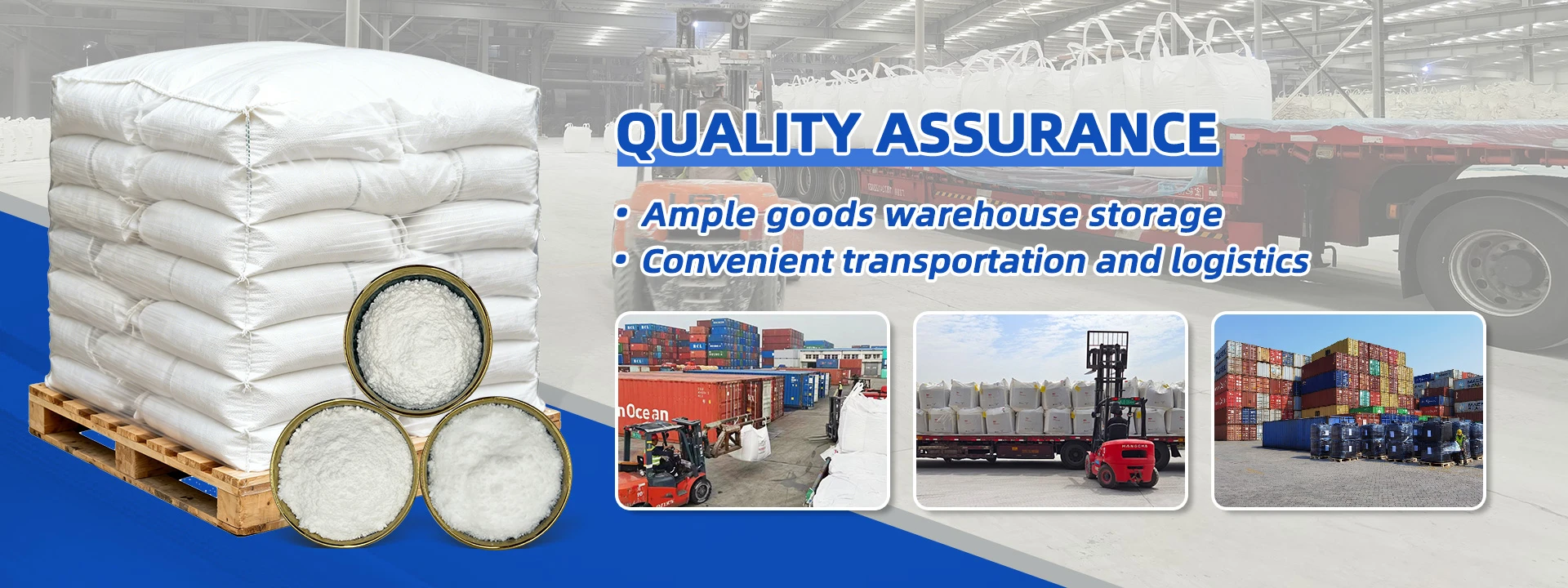
White carbon black is a trade name rather than a description. The material contains no carbon, it is not black, and the name survives only because it was coined as a light-coloured substitute for carbon black in rubber. What the name refers to is synthetic amorphous silicon dioxide, a manufactured powder whose commercial value lies almost entirely in its surface.
That single fact about white carbon black explains most of what follows. Because the material is made rather than mined, its properties are set by the process rather than by a deposit. Because the value sits in the surface, two grades with the same chemical assay can be different products.
What the Material Is
Chemically, white carbon black is silicon dioxide in hydrated, amorphous form, written SiO₂·nH₂O. The silicon-oxygen network is three-dimensional and disordered, with silanol groups on the surface and water held in the structure and the pores.
Being amorphous is the defining property, not a detail. Crystalline silica, whether quartz or cristobalite, has an ordered lattice, a specific surface of a few square metres per gram, and a hazard classification that amorphous silica does not carry. The two are sold into overlapping markets and they are not interchangeable.
Three materials are regularly confused with white carbon black:
Carbon black. Elemental carbon, black, made by incomplete combustion. It reinforces rubber by a different mechanism and cannot be substituted by silica without changing the coupling system.
Ground quartz or diatomite. Crystalline, 1 to 5 m²/g, a filler rather than a reinforcing agent, and a respirable hazard when finely divided.
Silica fume. A by-product of silicon and ferrosilicon furnaces, 15 to 25 m²/g, pozzolanic, used in concrete. It is not a precipitated product and it does not perform as one.
How It Is Made
Two processes account for nearly all commercial volume of white carbon black, and they produce different materials rather than different grades of one material.
Precipitated. Sodium silicate solution is neutralised with an acid, usually sulphuric acid, under controlled temperature and pH. The precipitate is filtered, washed to remove sodium sulphate, dried, and milled or granulated. Primary particles are 5 to 40 nanometres, and they fuse into aggregates of 100 to 300 nanometres during the reaction. Reaction conditions set the surface area and the aggregate structure, which is why one plant can make a whole family of grades from one line.
Fumed, or pyrogenic. Silicon tetrachloride is burned in a hydrogen and oxygen flame. The oxide forms as a fine fume, is collected, and the hydrogen chloride produced is recovered. Primary particles are 7 to 40 nanometres and the aggregates are more open and less dense than the precipitated type. The process costs more and the product behaves differently: higher purity, lower bulk density, stronger thickening.
Two further types complete the white carbon black family. Gel grades are defined by pore structure rather than particle size and are used as matting agents and desiccants. Dental grades are engineered for abrasive value and refractive index match.

The Forms It Ships In
The same chemistry leaves the plant in three physical forms, and the choice is a handling decision as much as a technical one.
| Form | Bulk density | Dust | Dispersion | Where it is chosen |
|---|---|---|---|---|
| Powder | Lowest | Highest | Fastest in a high-shear mixer | Coatings, adhesives, oral care, small batches |
| Granule | Medium | Moderate | Needs wetting time but flows well | Rubber mixed in internal mixers, bulk handling |
| Micropearl or bead | Highest | Lowest | Slowest to wet out, cleanest to handle | Large rubber plants, pneumatic conveying, low-dust workplaces |
The difference between the three is not quality. A granulated grade and a powdered grade can come from the same reaction batch, and the granule is simply the powder densified. What changes is how it behaves in the plant: dust, flow, conveying, and the time it takes to incorporate.
What the Product Does
Four functions account for most consumption of white carbon black, and a grade is normally designed for one of them.
Reinforcement. In rubber, silica raises tensile strength, tear resistance and abrasion resistance, and lowers rolling resistance when coupled to the polymer with a silane. It is the largest single use by volume.
Thickening and thixotropy. The silanol network builds viscosity at rest and breaks down under shear. This is the basis of its use in sealants, adhesives, coatings and silicone rubber, and it is why storage stability and sag resistance can be tuned without changing the binder.
Matting. Controlled aggregate size scatters light at the film surface. Matting grades are specified by gloss at a given angle and loading rather than by surface area.
Anti-caking and carriers. A fine, high-surface powder coats the particles of a hygroscopic material and keeps it free-flowing, and the same property lets it carry a liquid active into a powder form.
The Properties That Get Specified
A complete specification for white carbon black answers four different questions, and no single figure answers more than one.
O chemical question is answered by silicon dioxide content on an ignited basis, and by the limits on moisture, pH, iron and heavy metals. The surface question is answered by BET area for total surface and CTAB area for the external surface that a polymer can actually reach. The structure question is answered by DBP absorption, which measures how the aggregates branch and entangle. The physical question is answered by bulk density, sieve residue at 45 micrometres, whiteness and oil absorption.
A datasheet with only the first group describes a chemical, not a product.

Grades and What Separates Them
Two attributes divide the family more than any other.
The first is process: precipitated, fumed, gel or dental, as above.
The second is surface treatment. Untreated white carbon black is hydrophilic: silanol groups cover the surface and it disperses in water but not in oil. A treated grade carries an organosilane or a silicone fluid grafted onto those groups, which makes it hydrophobic, compatible with organic systems, and stable in a polar solvent. Treatment changes the pH, the moisture behaviour, the thickening efficiency and the cure chemistry, so a treated grade is a different product rather than a better one.
What It Is Not Sold On
Not on purity alone. Silicon dioxide content above 98% is routine across the family, and a ground quartz can meet the same figure while providing a tenth of the reinforcing surface.
Not as a drop-in replacement for carbon black. Without a coupling agent, substituting silica into a carbon black compound raises hysteresis rather than lowering it, because the filler network is not bonded to the polymer.
Next Step
Send the application, the process and the property the formulation needs to move. The Hezhen technical team will identify which of the four product lines the application calls for, state the surface, structure and physical figures the grade is supplied against, and confirm whether an untreated or a surface-treated grade is the correct starting point.


