




Published: October 29, 2026 | Last Updated: October 29, 2026
SEO Title Tag: Calcined Kaolin for Coatings and Cables in the Gulf | Hezhen Meta Description: How calcined kaolin works as a TiO₂ extender and insulation filler in Gulf and African coatings, cable and refractory plants, with specifications and handling notes.
Calcined kaolin is kaolin clay that has been heated to roughly 650–1100 °C until its chemically bound water leaves the crystal lattice. The treatment converts a plastic white clay into a hard, bright, chemically inert powder with high opacity, low conductivity and predictable particle behaviour. For formulators in the Gulf and across Africa, where coatings face intense UV and heat, cable compounds must hold insulation under high ambient temperature, and refractories line kilns running continuously, calcined kaolin is one of the few extenders that improves durability rather than merely reducing cost. This article explains what calcination changes, where the material earns its place, and which specifications a buyer should tie to the application.

What Calcination Actually Changes
Raw kaolin is a hydrated aluminosilicate with hydroxyl groups locked into a layered structure. Heating drives those groups off as water vapour. Between roughly 500 and 800 °C the ordered lattice collapses into an amorphous, reactive aluminosilicate — the material known as metakaolin. Continue heating and the structure reorganises further, dehydroxylation is complete, and at higher temperatures mullite begins to form, which is what gives fully calcined grades their hardness and refractory value.
Three properties move in ways that matter commercially. Brightness and opacity rise, because the removal of structural water and the change in refractive behaviour make the particle a more efficient light scatterer. Oil absorption increases, which helps matte and satin coatings control gloss. Electrical resistivity improves and water absorption falls, which is why calcined clay appears in cable insulation. Plasticity, by contrast, disappears: a calcined product is no longer a ceramic body clay, and buyers who need workability must stay with a hydrous grade.
Why the Gulf and African Markets Specify It
Three conditions shape demand in the region. Solar load and heat age paint films quickly, so extenders must resist chalking and must not introduce photo-active iron or titania impurities. Construction volume keeps cement, plaster, putty, tile and refractory consumption high, and every one of those chains uses mineral fillers. Import dependency means the material spends weeks in transit and then sits in warehouses at 40 °C and high humidity, so moisture specification and packaging integrity are not administrative details.
There is also a cost logic that is specific to the region. Titanium dioxide is imported, expensive and subject to freight and currency swings. A locally stocked, mineral-based extender that displaces 10–30% of the TiO₂ load in matte and satin systems reduces exposure to those swings without changing the binder system.
Where Calcined Kaolin Performs
Decorative and Industrial Coatings
In water-borne and solvent-borne paints, calcined kaolin acts as a functional extender. Its plate-like particles build hiding power and improve scrub resistance, while controlled particle size keeps gloss where the formulation needs it and knocks it down where a matte finish is wanted. In exterior systems for hot climates, the low iron and titania content limits yellowing and chalking. Practical loading depends on PVC and binder type; the working rule is to replace 10–30% of the TiO₂ weight and adjust dispersant dosage rather than merely substituting on a kilo-for-kilo basis.
Wire, Cable and Electronic Insulation
Calcined clay contributes high volume resistivity and low water absorption to PVC and cross-linked polyethylene compounds. In Gulf cable plants, where summer ambient temperatures push compound processing windows, the thermal stability of a fully calcined filler helps keep extrusion consistent. Low conductivity matters equally in electronic housings, connectors and switchgear components.
Refractories, Ceramics and Construction Chemicals
Fully calcined grades carry the mullite precursor that gives firebricks and castables their thermal shock resistance, and they are used in kiln furniture, insulating panels and high-alumina bodies. In construction, calcined clay appears in putty, tile adhesive and dry-mix systems as a rheology and brightness modifier. In all three cases the buying decision hinges on consistency of chemistry, not on a single bright sample.
Rubber and Polymer Compounds
As a semi-reinforcing filler, calcined kaolin raises stiffness, dimensional stability and heat resistance in rubber goods, hoses, seals and thermoplastic compounds, with lower moisture pickup than hydrous clay. Surface-treated versions improve dispersion and interfacial bonding where mechanical targets are demanding.

Specification Sheet: What to Write Into the Purchase Order
| Parameter | Typical value | Method | Why the buyer should care |
|---|---|---|---|
| ISO brightness | 90–92% | ISO 2470-1 | Determines TiO₂ replacement and colour control |
| D50 particle size | 1.8–2.5 μm | Laser diffraction | Gloss, opacity, dispersion, screen wear |
| Al₂O₃ | 42–44% | XRF | Refractory and chemical behaviour |
| SiO₂ | 52–54% | XRF | Balance of the aluminosilicate framework |
| Fe₂O₃ | ≤0.3% | XRF | Yellowing and fired colour |
| Loss on ignition | ≤0.5% | GB/T 14565 | Confirms complete calcination |
| pH (10% suspension) | 5.5–7.0 | ISO 787-9 | Binder and dispersant compatibility |
| Moisture (105 °C) | ≤0.4% | ISO 787-2 | Caking, dosing, cable compound voids |
| 325 mesh residue | ≤0.1% | Sieve test | Surface defects and equipment wear |
Two entries deserve emphasis. Loss on ignition above 1% usually means the clay was not fully calcined, which shows up later as inconsistent gloss or outgassing in an extruder. Moisture above 0.5% in a hot warehouse becomes a handling problem before it becomes a quality problem.
Handling, Storage and Logistics in Hot Climates
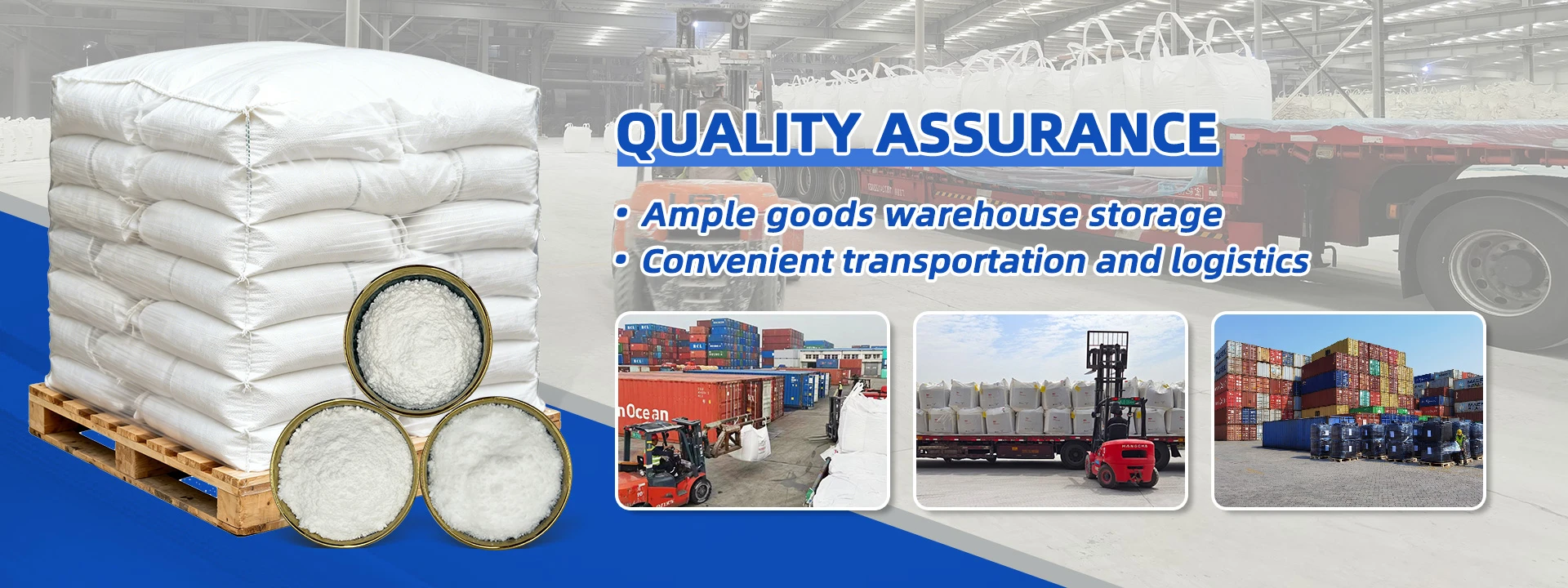
Calcined kaolin is supplied in 25 kg multilayer kraft bags or jumbo bags, palletised or loose, on FOB or CIF terms. In Gulf and African conditions, three practices prevent most claims: store bags off concrete and out of direct sun, keep the pallet stretch-wrap intact until the bag is ready to use, and avoid opening jumbo bags in humid air ahead of the shift. Where pneumatic transfer is used, confirm the fines content with the supplier, because a high fines fraction fluidises unevenly and dusts at the feed point.
Frequently Asked Questions
1. Is calcined kaolin the same as metakaolin? No. Metakaolin is the low-temperature calcination product, roughly 650–800 °C, kept amorphous and reactive for cement and concrete. Fully calcined kaolin is heated further for brightness, hardness, opacity and electrical performance. They are different products with different specifications.
2. How much TiO₂ can it replace in a paint formula? Commonly 10–30% of the TiO₂ weight in matte and satin systems, with hiding power held when dispersant dosage is rebalanced. Gloss systems need a separate trial because extender loading changes sheen and gloss retention.
3. Does it work in exterior coatings in high-UV climates? It does, provided iron and titania impurities are low, which is why a 0.3% Fe₂O₃ limit or better belongs in the specification. The extender itself is chemically inert and does not chalk.
4. Which grade suits cable compounds? A fully calcined grade with low moisture, low residue and high resistivity. Ask for the electrical and moisture data rather than assuming that any calcined clay qualifies.
5. What documentation should come with the shipment? A lot-specific certificate of analysis covering brightness, particle size, chemistry, loss on ignition, pH, moisture and residue, an MSDS, and a retained sample from the same lot. REACH and RoHS statements are normally requested for European-linked supply chains.
Next Step
Send the application, the target brightness and D50, the binder or polymer system, and the moisture limit your process can tolerate. The Hezhen technical team will match a calcined grade to the specification, confirm the lot certificate before shipment, and supply a sample so the material can be validated in your own formulation ahead of the first container.


