

Sepiolite Fiber Reinforcement Properties Ideal for 3D Printing Fillers Textile Flame Retardants and Industrial Desiccants Applications
2025.12.17
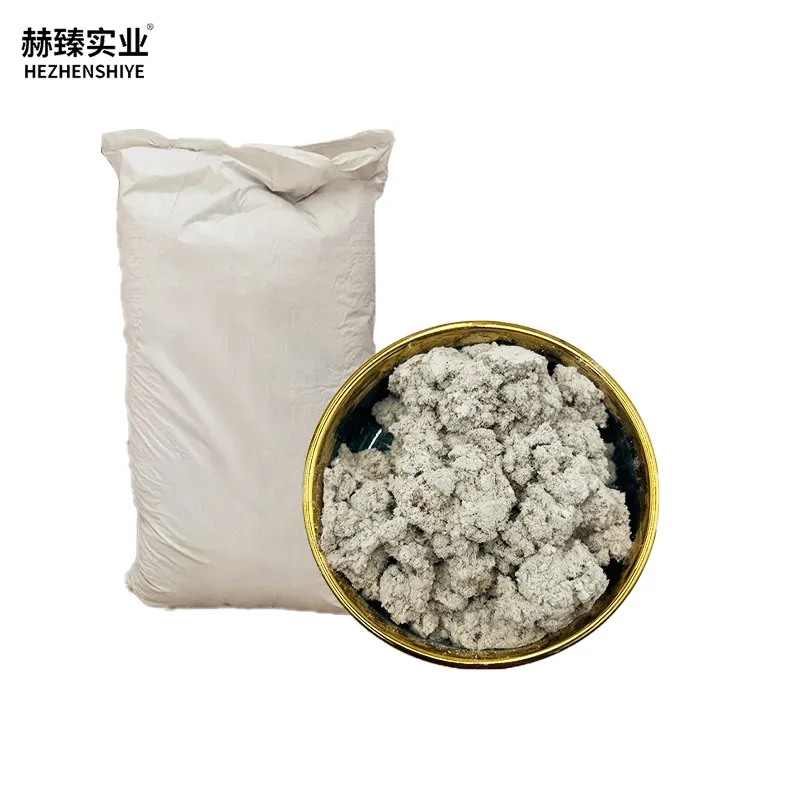
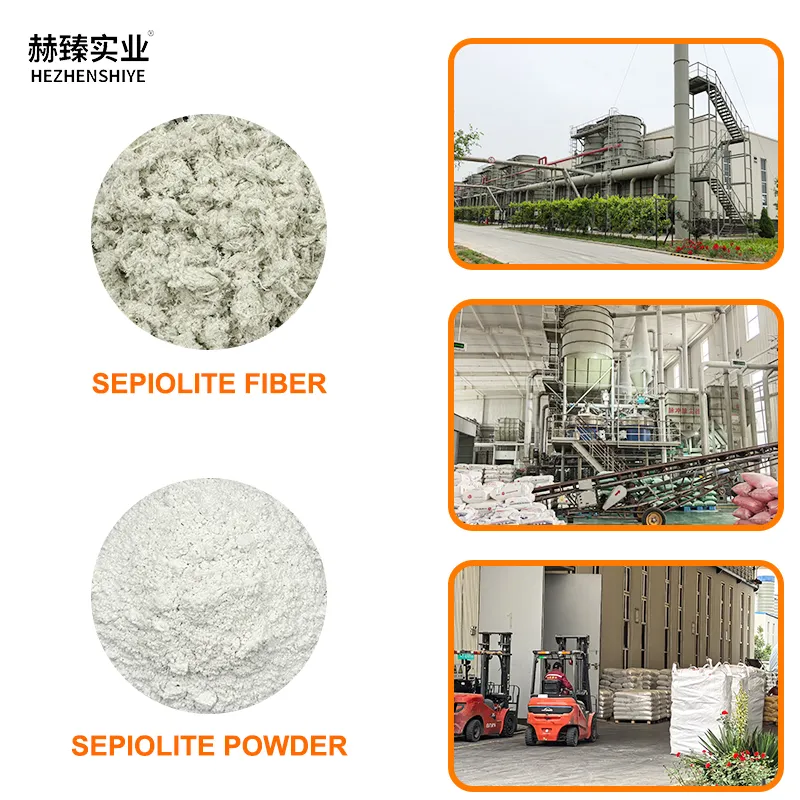
Sepiolite Fiber is natural fibrous mineral of magnesium silicate category, formed through long-term and intricate geological processes that combine lake sedimentation and gradual chemical mineralization. It mainly originates from large lacustrine basin sedimentary environments, where magnesium-rich rocks (such as dolomite and serpentine) undergo slow chemical weathering under the action of rainwater and groundwater, releasing magnesium and silicon ions. These ions then dissolve in lake water, mixing with suspended clay particles carried by inflowing rivers, and gradually crystallize under stable pH (weakly alkaline) and moderate temperature (ten to twenty-five degrees Celsius) conditions over thousands of years. Key product of this gentle and prolonged formation process is slender, flexible fiber bundles with well-developed internal pores. Most distinctive structural feature of Sepiolite Fiber is its multi-level porous system, composed of tiny axial micro-channels (diameter in nano scale) running through the center of each fiber and irregular inter-fiber voids formed between adjacent fiber bundles. This unique structure endows it with integrated properties of strong adsorption, reliable reinforcement and excellent rheological regulation, laying foundation for its diverse industrial applications.
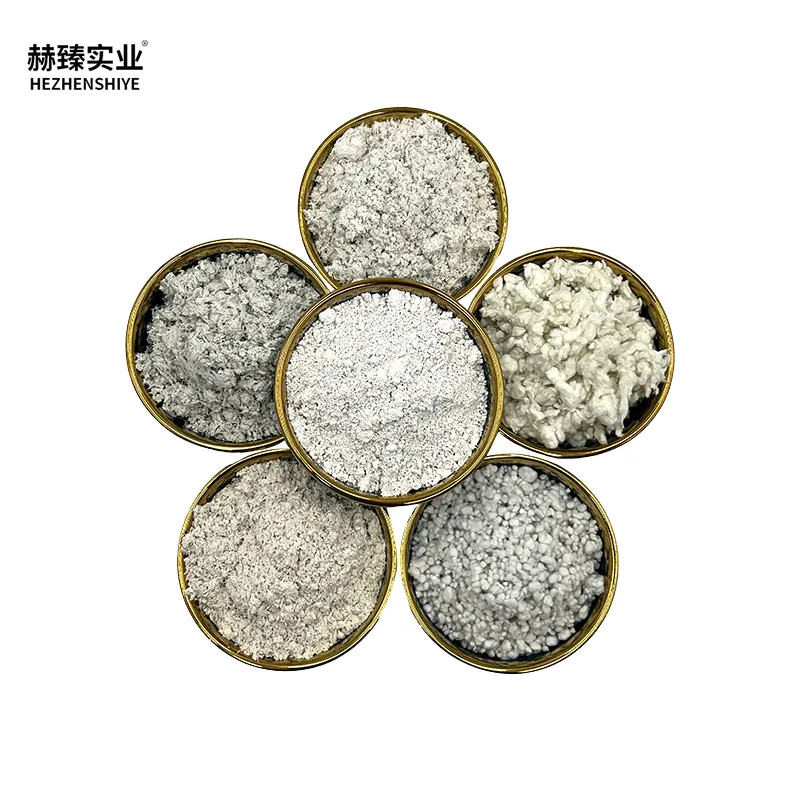
Core properties of Sepiolite Fiber include strong adsorption capacity, reliable mechanical reinforcement, excellent thermal stability and good dispersion performance, all of which are closely linked to its inherent structure. Porous system of Sepiolite Fiber provides extremely large specific surface area—each gram of pure Sepiolite Fiber has a surface area equivalent to several square meters—enabling it to efficiently capture liquids, gases and micro-particles of different sizes. Surface hydroxyl groups (-OH) on Sepiolite Fiber enhance adsorption selectivity by forming stable hydrogen bonds or coordination bonds with target substances (such as water molecules and organic gases), ensuring it can target specific impurities. Fibrous morphology of Sepiolite Fiber allows it to interweave tightly with other materials (like polymers and textiles) to form stable three-dimensional networks, significantly improving mechanical strength (including tensile and impact strength) of composite products. Thermal stability ensures Sepiolite Fiber maintains its original structure and properties at high temperatures (up to three hundred degrees Celsius in short term), while good dispersion performance enables it to distribute uniformly in various liquid or solid matrices without agglomeration, ensuring consistent performance of end products.
3D printing fillers industry gains notable value from reinforcement and lightweight properties of Sepiolite Fiber, becoming emerging application field in additive manufacturing. When added to common 3D printing materials such as polylactic acid (biodegradable polymer) and acrylonitrile-butadiene-styrene (high-strength polymer), Sepiolite Fiber acts as functional filler that significantly enhances mechanical performance of printed parts. During 3D printing process, slender fiber bundles of Sepiolite Fiber interlock tightly with polymer matrices when the latter melts, and maintain this interlocked structure during solidification, effectively improving tensile strength and impact resistance of printed components by twenty to thirty percent. Porous structure of Sepiolite Fiber reduces overall density of printing materials, contributing to lightweight design of 3D printed products without compromising structural strength—critical for applications like automotive parts where weight reduction is key. Additionally, Sepiolite Fiber improves dimensional stability of printed parts by regulating heat transfer during cooling, reducing warping and deformation that often occur with pure polymer materials. Such composite printing materials are widely used in manufacturing of industrial prototypes (for product design verification), automotive spare parts (like interior brackets) and household appliances (such as small gear components).
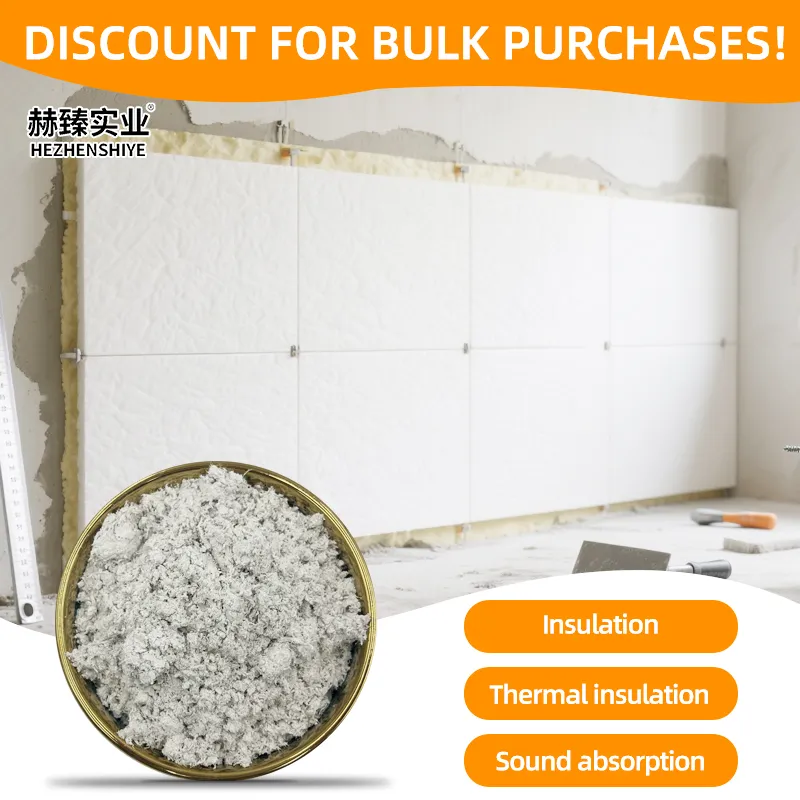
Textile flame retardants sector relies heavily on thermal stability and unique flame-retardant mechanism of Sepiolite Fiber, replacing some synthetic flame retardants with potential toxicity. As natural flame-retardant additive, Sepiolite Fiber is incorporated into cotton, polyester and blended textiles through two main processes: dipping (textiles soaked in Sepiolite Fiber suspension then dried) or spinning (Sepiolite Fiber mixed into spinning solution before fiber formation). When textiles containing Sepiolite Fiber encounter high temperatures (such as open flame or intense heat), Sepiolite Fiber does not burn but instead melts slightly and forms dense ceramic-like protective layer on fiber surface. This layer acts as physical barrier, isolating oxygen from underlying textile and preventing flame spread. Meanwhile, porous structure of Sepiolite Fiber absorbs large amounts of heat, reducing surface temperature of textiles, and decomposes gently to release inert gases, which dilute combustible gases around textiles and further suppress combustion. Sepiolite Fiber is natural and non-irritating, making it suitable for flame-retardant textiles such as industrial workwear (for factory workers), building curtains (for public spaces) and children's clothing. Additionally, its fibrous structure interweaves with textile fibers, improving wear resistance and durability of textiles while providing long-lasting flame retardancy.
Industrial desiccants field is important application area where Sepiolite Fiber demonstrates unique and cost-effective advantages, widely used in moisture-proof protection of high-value products. After simple processing (crushing, granulating and drying), Sepiolite Fiber is made into granular or powdered desiccants that are packed into breathable bags or integrated into packaging materials. These desiccants are used to absorb moisture in packaging, storage and transportation of electronic components (such as semiconductors and circuit boards), precision instruments (like optical lenses and measuring tools) and industrial raw materials (including chemical powders and metal parts). Porous structure of Sepiolite Fiber has strong capillary action—tiny channels draw in moisture through surface tension—enabling it to absorb moisture up to three to five times its own weight. Surface properties of Sepiolite Fiber (hydrophilic groups combined with porous structure) form stable moisture bonds, preventing moisture re-release even in high-humidity environments (relative humidity above eighty percent), ensuring long-term drying effect. Compared with traditional desiccants like silica gel, Sepiolite Fiber has lower production cost (about thirty percent less) and better biodegradability—used desiccants can be buried in soil and decompose naturally within one to two years. It can also be regenerated through low-temperature heating (one hundred to one hundred fifty degrees Celsius) to remove absorbed moisture, making it suitable for cyclic use in industrial moisture-proof systems (such as warehouse dehumidification equipment).
Processing of Sepiolite Fiber is carefully designed to preserve its natural fibrous structure and porous properties, with simple and energy-efficient procedures that avoid harsh treatments. After mining raw ore from lacustrine basin deposits, first step is gentle air-drying—raw ore is spread in open yards or low-temperature drying chambers (temperature below sixty degrees Celsius) to reduce surface moisture content to fifteen to twenty percent, preventing fiber degradation caused by high-temperature drying. Next, crushing is carried out using low-pressure roller crushers (pressure controlled at five to ten megapascals) to break raw ore into small aggregates (particle size of two to five millimeters) without damaging delicate fiber bundles inside. Key step is air classification: crushed aggregates are fed into air classifiers with adjustable air flow speed (ten to fifteen meters per second), where lightweight, slender Sepiolite Fiber bundles are carried by air flow and collected, while heavy impurities such as sand and clay particles fall down and are removed. For specific applications, targeted modification is conducted without altering core properties: for 3D printing fillers, surface treatment with silane coupling agents (like vinyltriethoxysilane) enhances compatibility with polymer matrices; for industrial desiccants, granulation with natural binders forms regular-shaped granules for easy packaging.